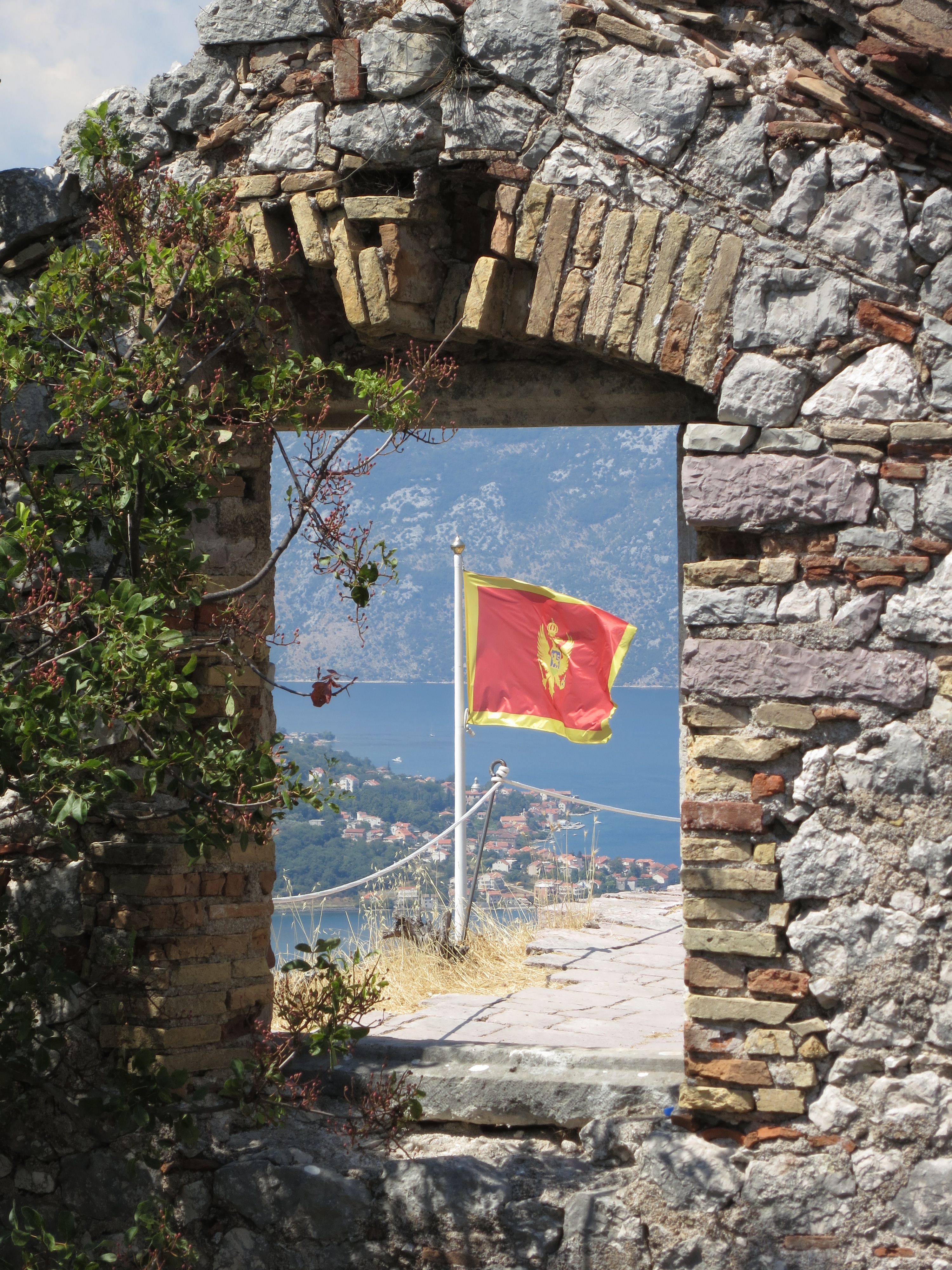
Kotor: Montenegro’s mini-Dubrovnik

Leaving Sarajevo, we had a few days to spare before our flight out of Belgrade, and we’d loved every bit of the Balkans we’d visited so far.  So why not get in another country?  By all reports, Montenegro was a good option for some time by the water – so it was just left to pick a city, really.  A combination of bus timetables (both from Sarajevo, and to Belgrade), Wikitravel pages and Google image searches helped us choose Kotor.  There may have been some coin tossing involved as well – I can’t really recall.

Montenegro, ahoy, why not.

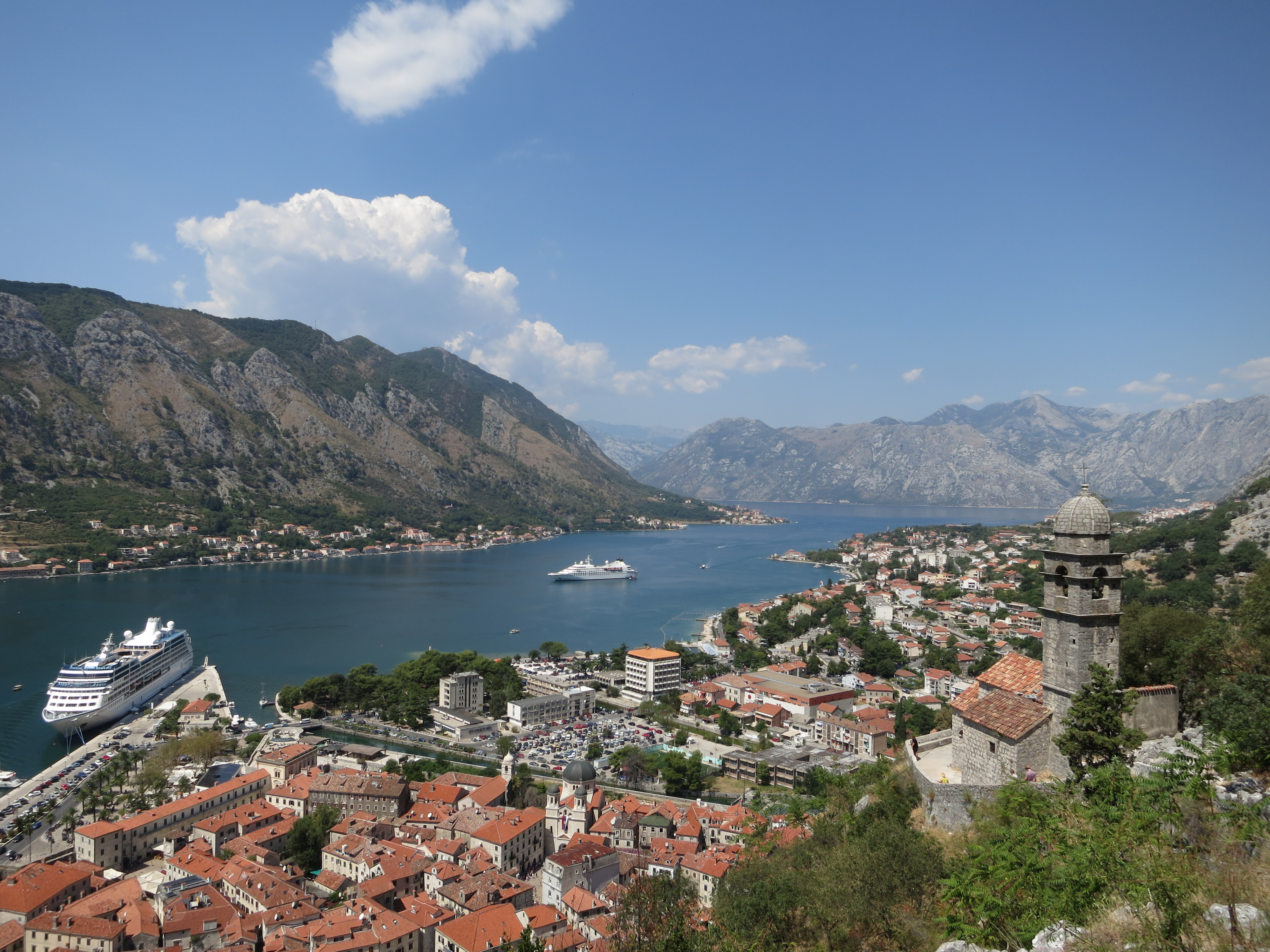
The bus trip into Herceg Novi, and then the connection on to Kotor, more than adequately demonstrated the picturesque beauty of the Montenegrin coastline, and confirmed for us that our choice to fit an extra destination into our allotted time in the region had been a good one.  And having made it that far, past the (living, moving, grazing) bovine obstacles that seemed to litter stretches of the Bosnian highway en route to Montenegro in the first place, the drive around the Bay of Kotor was like the geography of Montenegro advertising to all and sundry:  ‘see, we have such excellent coastline that it seemed only reasonable to include a stunning natural harbour, just to have that much more waterfront to share with the world.’

The spectacular Bay of Kotor

And once we were done admiring the journey there, we found a lot to like in Kotor itself, as well.  It’s selling the city short somewhat to describe it as Dubrovnik-lite, but that’s a good start nonetheless.  It doesn’t have quite the crowds that Dubrovnik does (yet) – the cruise ships that grace its harbour are fewer and smaller.  It’s a more petite city, too;  but with that, it’s possibly more charming than the sometimes-impersonal Dubrovnik.  (Kotor has its swimming spots as well – and I imagine kayaking is just as possible here – but in that respect the Dubrovnik-lite moniker is accurate more in that they didn’t have quite the spectacular enchantment that we’d experienced weeks earlier in Croatia.  Still, you can’t have absolutely everything…)

Like Dubrovnik, the fortifications are a major attraction.  In Kotor’s case, this is a climb up the walls which run up the hill to St John’s fortress, for an amazing view out over the city and across the Bay of Kotor.  The climb is hot and hard work, granted, but the view from the top, and the fortress itself, are most definitely worth it.  Montenegro being not yet a nanny state, you can still explore the fortress and climb on its walls, without a forest of unsightly barriers – nor a team of spoilsport babysitters – preventing you from going anywhere interesting.  An afternoon well spent, enjoying the stony feel of history, marvelling at the view, and basking in the sunshine.

The fortifications of St John’s fortress, above Kotor

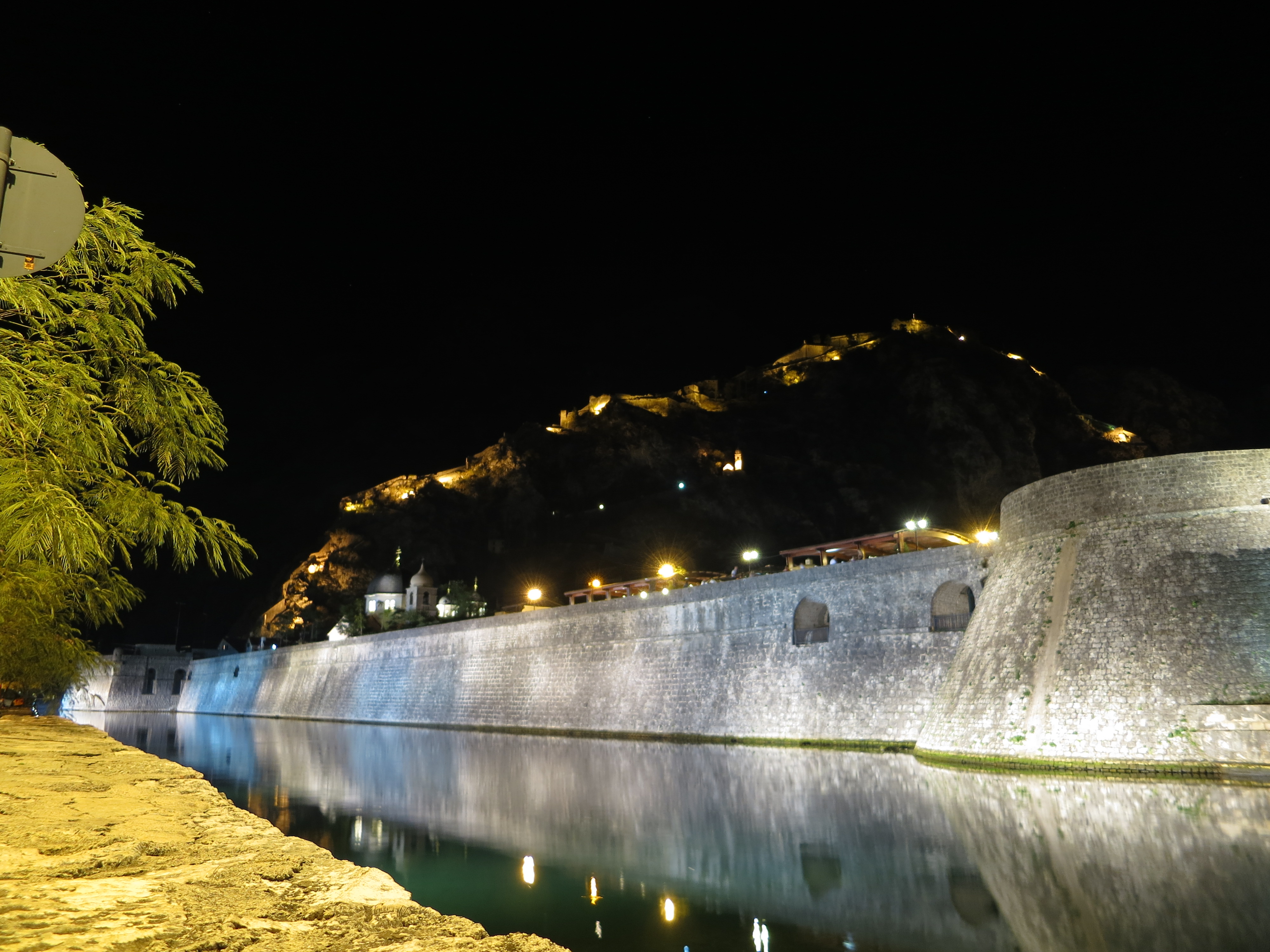
Once you’re back down, the fortifications make for a nice view from below, too.  We happily spent far too much time one evening trying for (but failing to get!) the perfect photo back up the hill as the sun set.

The best I could do trying to get a post-sunset shot of St John’s Fortress, above Kotor. The walls are pretty, yeah, but I feel I could have done better. Sad face.

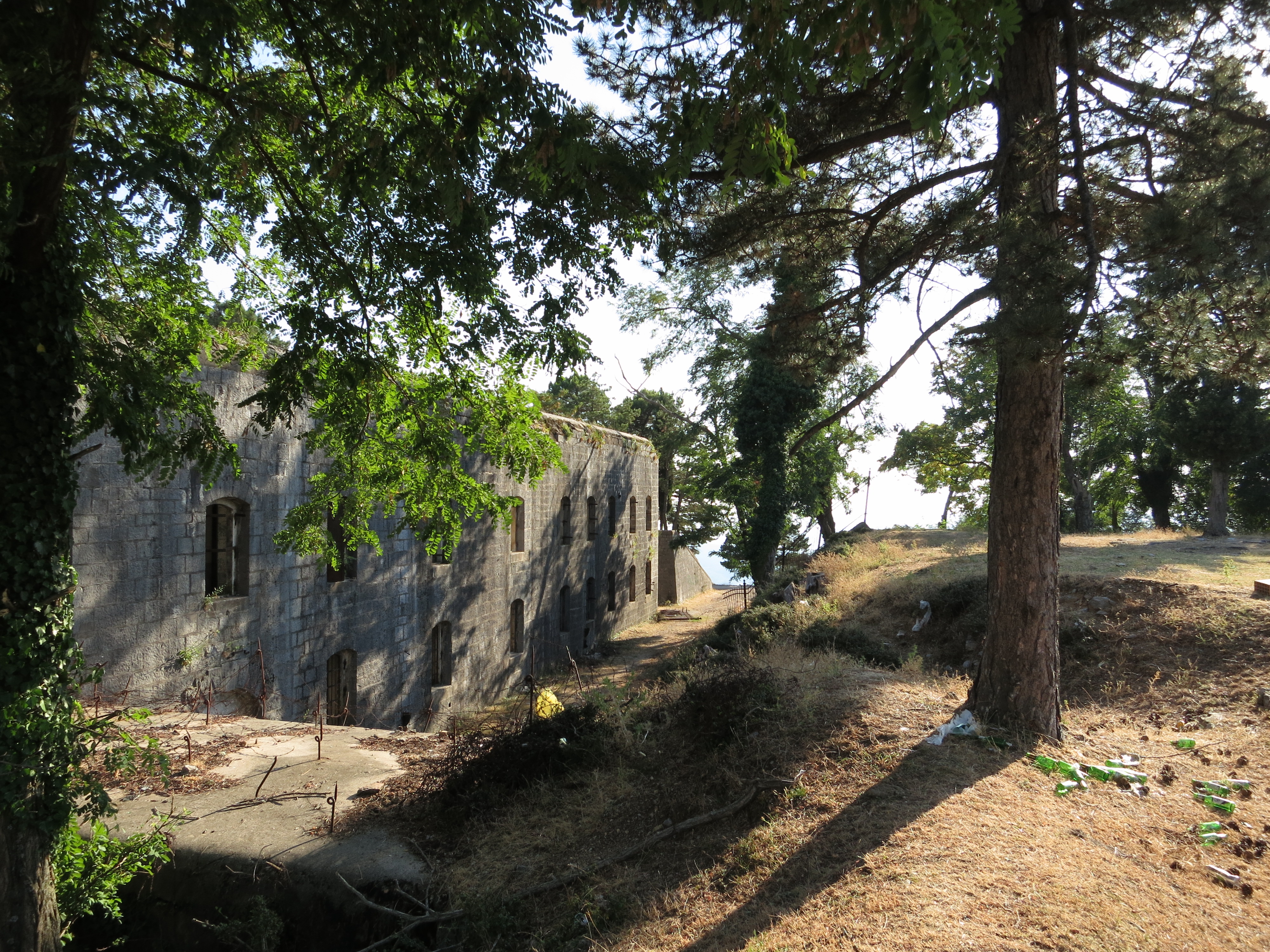
With not much time in Montenegro before we headed back up to Belgrade, but with a mid-afternoon departure, we had time for one more energetic pre-bus climb.  Across the Bay from the Old Town of Kotor is a walking trail to the top of the hill on the other side.  Aside from some more spectacular views, the climb also offered the attraction of a World War I era Austro-Hungarian fort:  Fort Vrmac.  The fort is abandoned now, but not yet derelict, and perfectly accessible and open for exploration.  Bring a torch, or spend a while letting your night vision adjust, and you can wander through and onto and over it all, playing quite the intrepid explorer.

Fort Vrmac, an Austro-Hungarian fort on the top of the hill by the Bay of Kotor

And then, once done, climb back down as we did, and reluctantly watch the beautiful scenery roll by on your way out of this spectacular country.  As you promise yourself you’ll be back.  And soon.

Revisiting Sarajevo

I’ve been to Sarajevo twice now.

The first time was a few years back, in my first year living in London, on a ‘hey, why not’ two-day side trip while I was visiting my friend Laura in Zagreb.  I think it was probably the first place where I remember being surrounded by sounds of the Muslim call to prayer each day.  Certainly it was the first where I’d seen real evidence of recent death and destruction – bullet holes in the side of the apartment block down the street (and the one the next street over, and three more down there, and a handful around the corner), burnt out buildings by the river, and a city clearly trying to remember and deal with its past without being defined solely by those years under siege.

I was a nerdy kid growing up, and while I certainly wasn’t sophisticated enough to have any real understanding of world affairs in my early teens, I was at least capable of understanding that watching the news was a thing that you were supposed to do if you wanted to think you were clever and well educated, and so I knew of Sarajevo.  I knew of it as a place on the other side of the world – far, far away – where bad things were happening.  And wasn’t it terrible;  everyone agreed it was.

Actually visiting Sarajevo that first time was an unexpected conflict of two completely different feelings.  First, the sobering and distressing force of understanding that this wasn’t something that happened on a TV screen in your living room, to be discussed at a distance as a dispassionate demonstration of your compassion and intellect.  Second, the realisation that this place that was so distant and foreign is a place you can actually go and touch and grapple with in the flesh.  First, a feeling that you are small and there is more to the real world than you so far understood.  Second, a feeling that the world is small, and that if you will, you can go out there and grasp it and try to understand it.

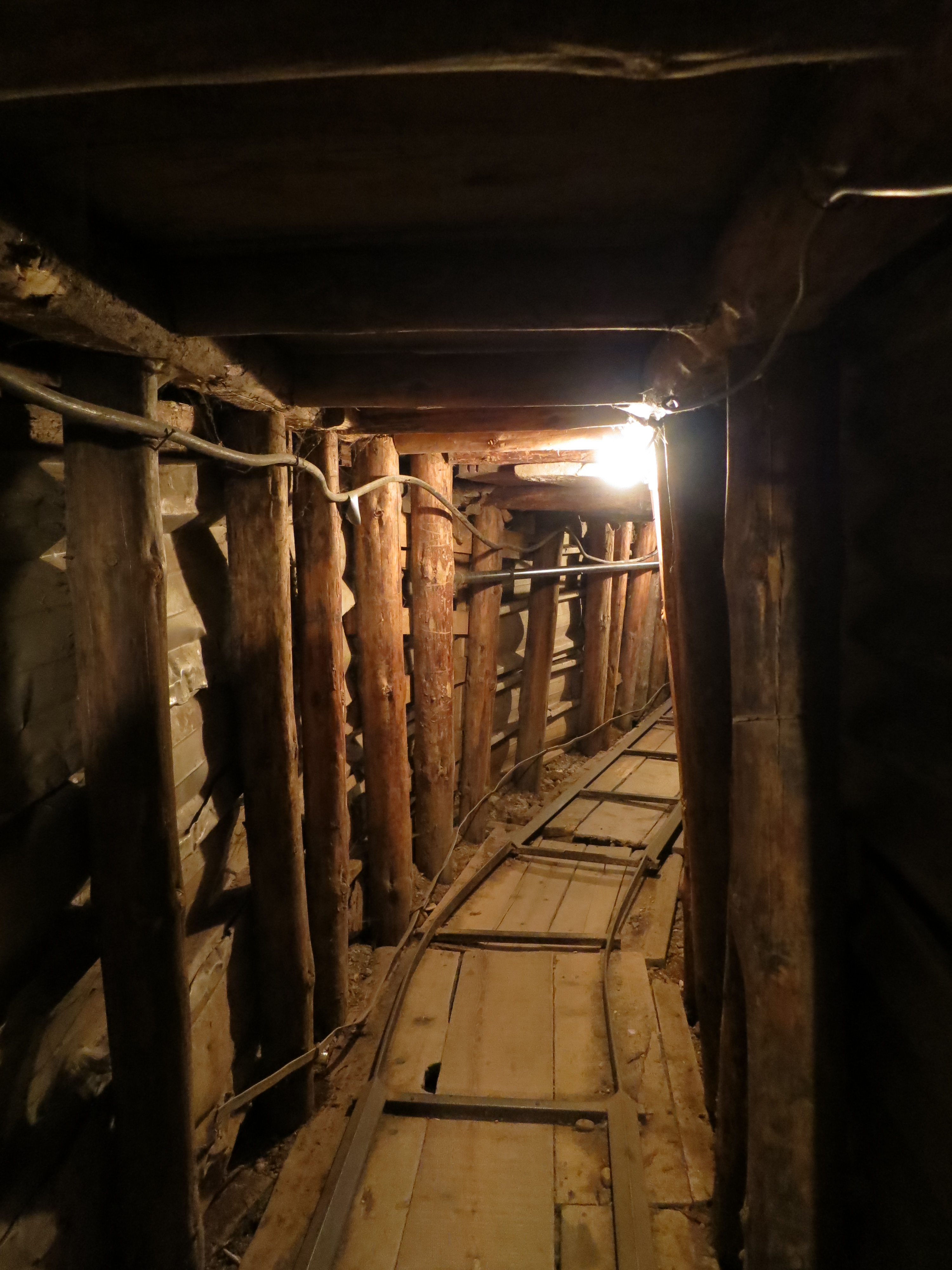
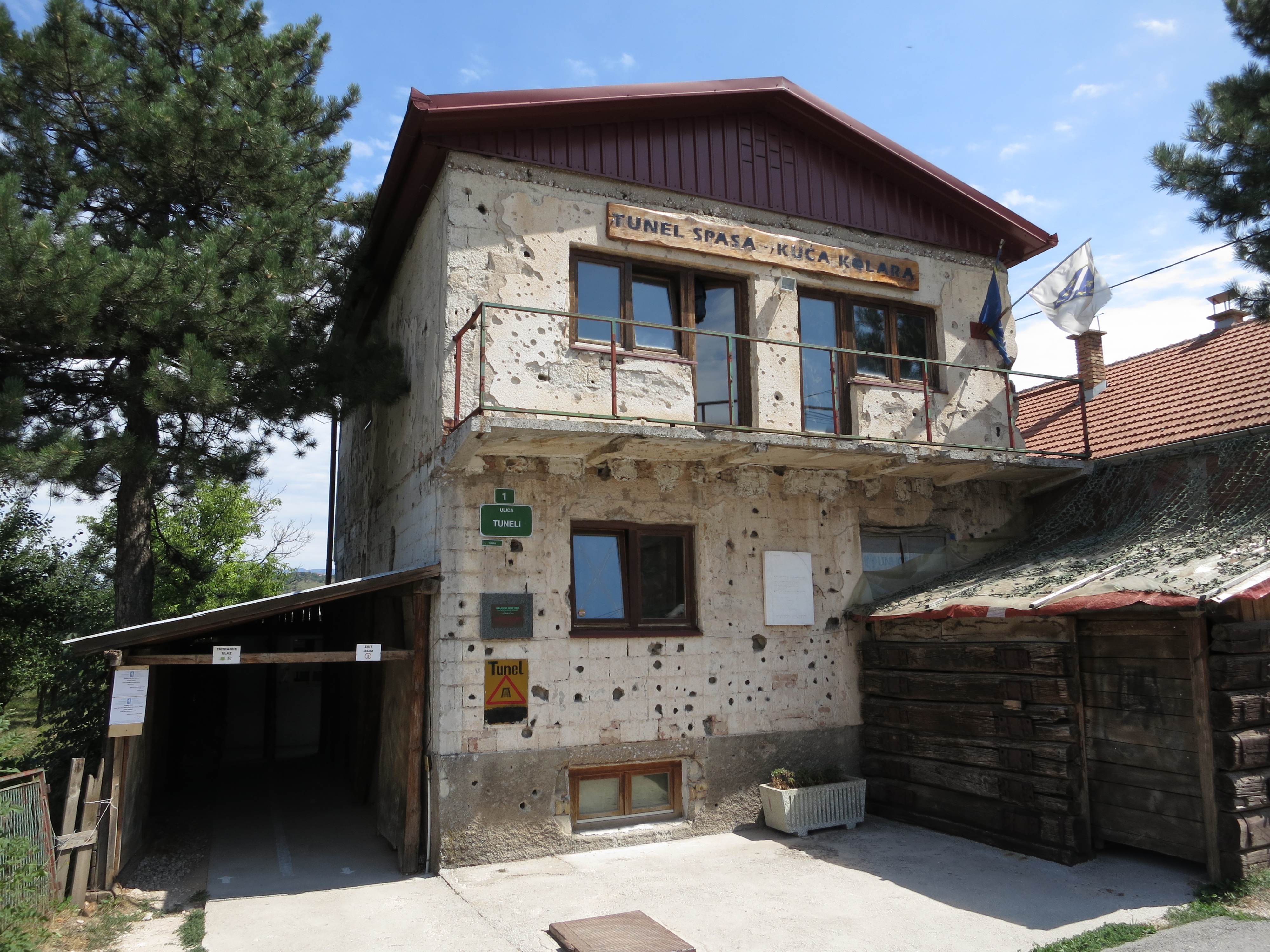
Probably the centrepiece of recent Bosnian history in Sarajevo is the Tunnel Museum:  a home on the other side of the airport which housed the exit of the ‘tunnel of life’, which was the tunnel under the runway which connected the besieged city to Bosnian forces on the outside.

A preserved section of the Sarajevo “tunnel of life”, which connected besieged Sarajevo and the free Bosnian forces on the other side of the airport

I will always associate Sarajevo with my memory of visiting that museum with my Croatian friend and also with two Serbian girls staying at the same hostel, the four of us guided by the Bosnian hostel owner, from whom the siege had stolen a significant portion of his teenage years.  The four of them discussed their relationships to the region’s wars:  growing up as Yugoslavia fell apart, all four with family involved in the conflict, all four immediately affected, but not all four on the same side.  I listened quietly (and hopefully respectfully), wrestling with a complete inability to even begin to comprehend what it would be like to have lived that childhood.

The bullet-ridden house which hid the exit to the Sarajevo “tunnel of life” – now the Tunnel Museum

So my second trip to Sarajevo had a lot to live up to.

It is still a city of bullet-riddled apartment blocks.  The Tunnel Museum is still an incredible reminder of a tragic horror (although our guide this time – again a local who grew up in the besieged city – was perhaps a little more out there with some of his conspiracy theories than the carefully considered view I had from our guide the first time around).  And the Bosnian capital is still a beautiful city, full of amazingly friendly people, good coffee, and mouth-watering food.

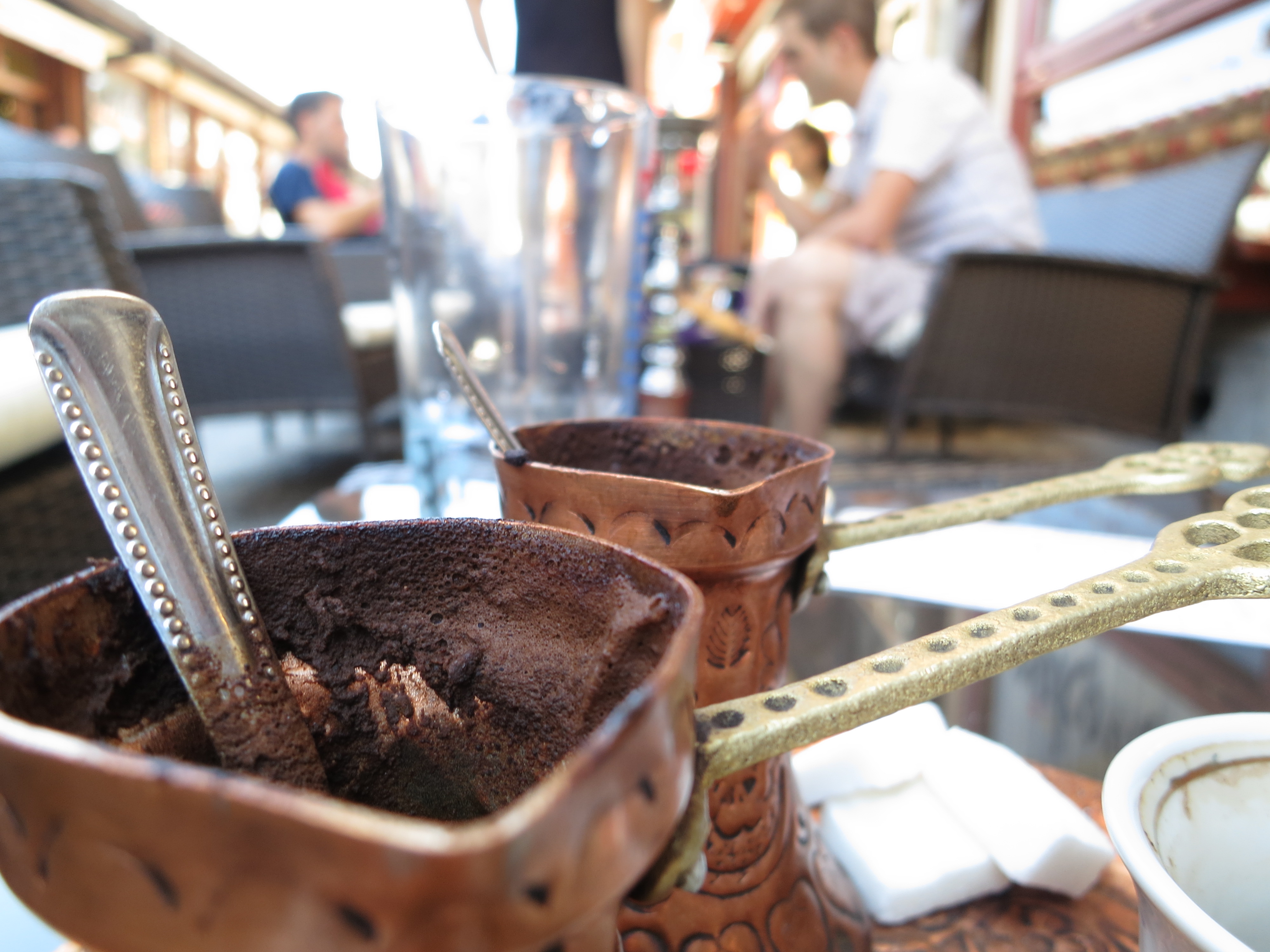
The remains of two cups of Bosnian coffee, thoroughly enjoyed in Sarajevo’s old town

A little more well-travelled now (and travelling through in summer rather than winter), this time I noticed the touristy influences more:  Sarajevo is on a lot of must-see lists (not least with a vigorous recommendation from Lonely Planet), and there are a lot of people must-seeing it.  Except for the minarets, much of downtown Sarajevo could easily pass for any other European capital, too, such is the extent to which it has recovered from its suffering in the early nineties.

This time we also made the effort to go out and find some of the old 1984 Winter Olympic venues – a bunch of abandoned and semi-abandoned sites not far from the city centre, presided over in their emptiness (well, empty except for the two carwashes which somewhat randomly flank one of the stadiums) by what can only be described as a very concrete Olympic-ring-topped monument.  With more time than my first visit, we explored the fort on the hill above town, as well as a selection of the city’s museums, too.  (The Historical Museum of Bosnia and Herzegovina has excellent coverage of Sarajevo under siege, and is well worth an hour or two, so long as you’re not afraid of being overwhelmed by photographic evidence of what the city went through.)

The Olympic rings towering unimpressively over a disused stadium from the 1984 Sarajevo Winter Olympics

And this time I saw in the city the remaining political divisions which I hadn’t noted on my first trip:  this time we bussed in from Belgrade, so arrived in the bus station in the Serbian (Republika Srpska) half of the city, over the hill and – geographically and politically – thoroughly separate from the (main) Bosniak half.

Leaving, this time, I remained firmly of the opinion that Sarajevo is a truly fascinating city.  And that they really do have some fantastic eateries in the old town especially, incredibly touristy though it may now be!

Liveable, loveable Belgrade

I think the most appropriate description I can give of Belgrade is that it’s an incredibly liveable city.  Most – in fact all – of the cities we travelled through in the former Yugoslavia fit that description, if I’m honest.  But it’s especially apt for Belgrade.  And I don’t mean ‘liveable’ as a euphemistically polite ‘pleasant but boring,’ either:  it’s a fascinating, lively, energetic, and above all welcoming spot.

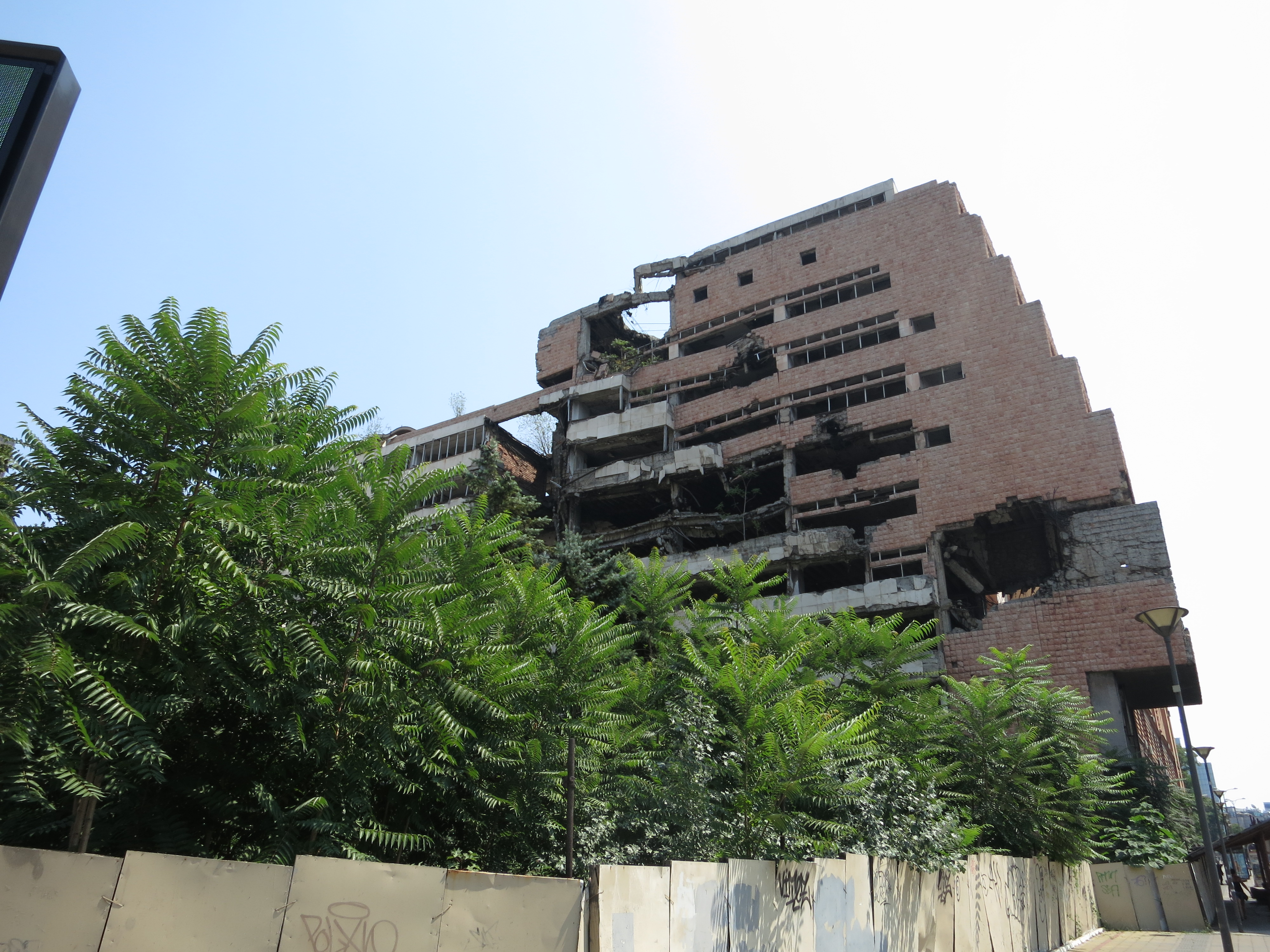
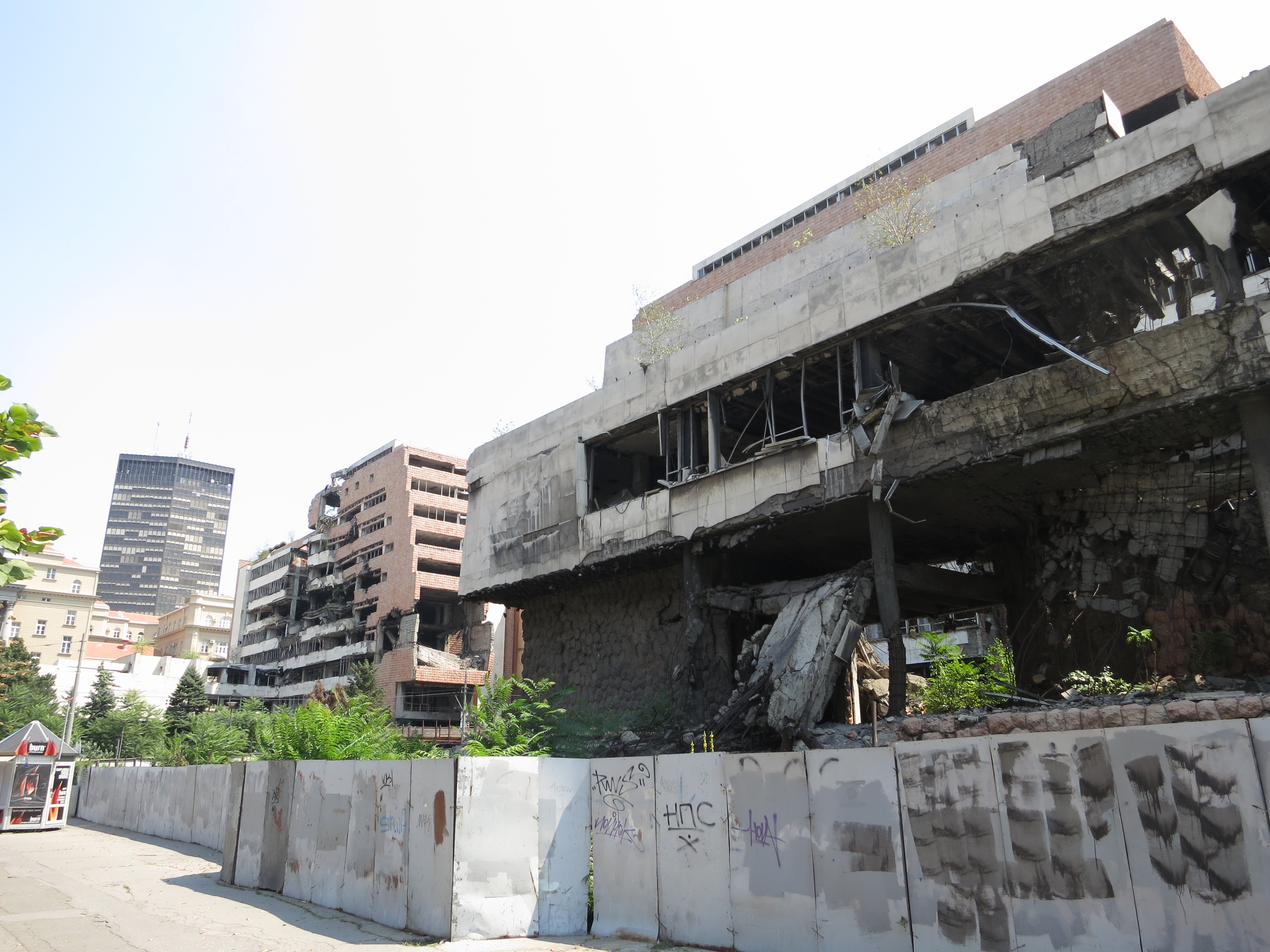
As a location that’s only recently made a reappearance on NATO’s Christmas card list, Belgrade still bears visible scars of recent turmoil in the region.  The former home of the Yugoslav Ministry of Defence (or the Serbo-Montenegrin one, if you prefer not to accept ‘Yugoslav’ to refer to that particular coupling post the exit of all the other SFRY states) was on the losing side of an argument with the US Air Force in 1999, but still stands today, minus an overpass and some exterior – and, for that matter, much interior – brickwork.  A monument to mistakes of the past, I suppose, patrolled by a lone soldier whose presence evokes either defiant preservation or embarrassed regret, depending on your interpretation of current Serbian attitudes toward recent history.

The old Yugoslav Ministry of Defence, bombed by NATO in 1999, still standing in ruins in central Belgrade

… the foliage is a nice touch, I think

Aside from that reminder, however, the city streets have a relaxed but quietly vibrant feel.  The pace of life is comfortable and unhurried – unquestionably the right attitude in the forty degree heat of Serbian summer.  But Belgrade is definitely an extrovert – a city that enjoys life, and wants you to as well.  Most of our days had a fairly gentle start:  we were pretty enthusiastic partakers of the local café culture, and I was most certainly not averse to a breakfast of cake and espresso on many a morning (or early afternoon).  Possibly followed by some coffee and confectionary for morning tea or brunch.  (The Serbs are particularly expert at combining pastry and minced meat, too.  So there might have been a few of those consumed also.  Especially given the ridiculously low prices, at which I could do little but laugh.)

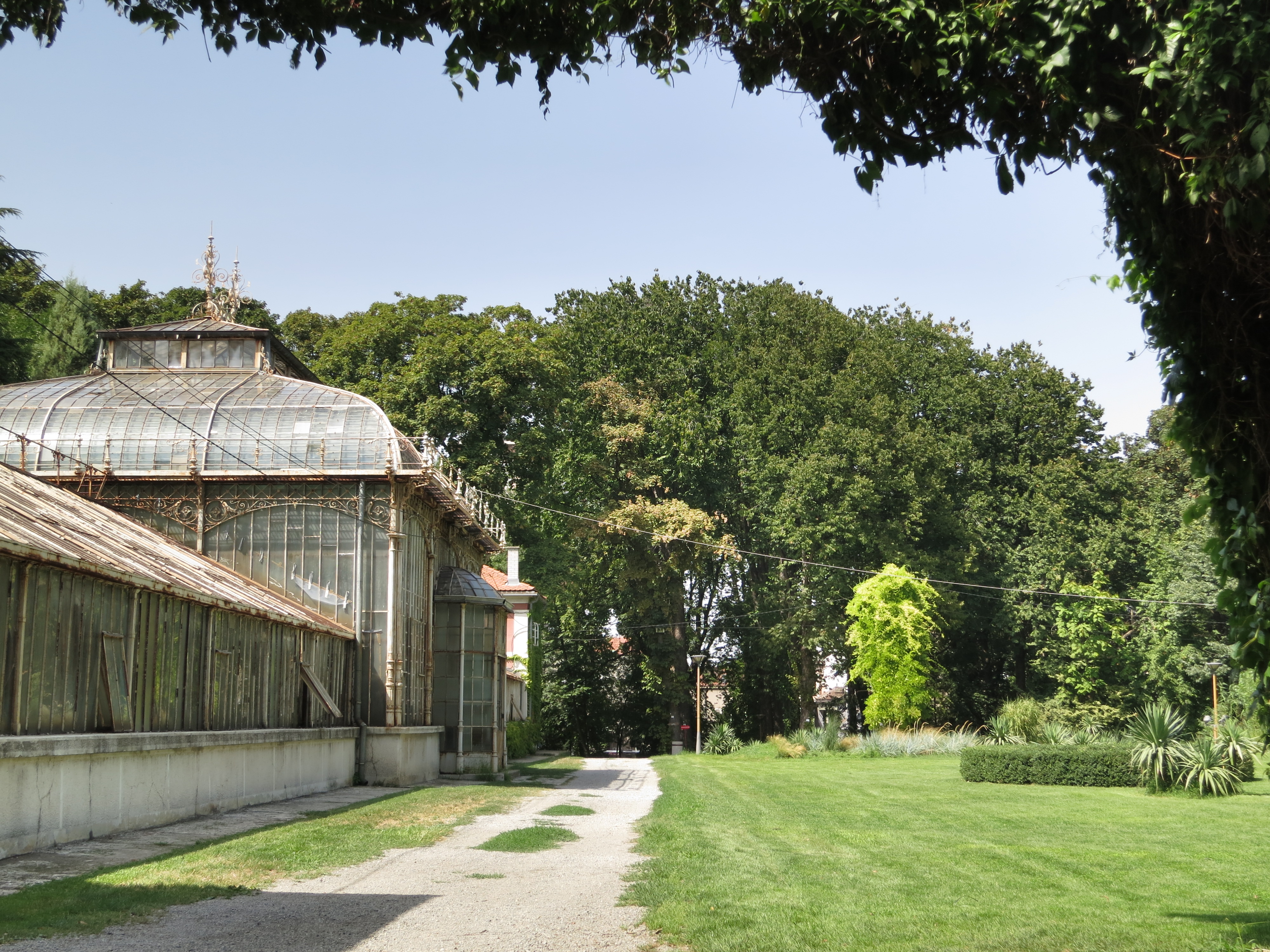
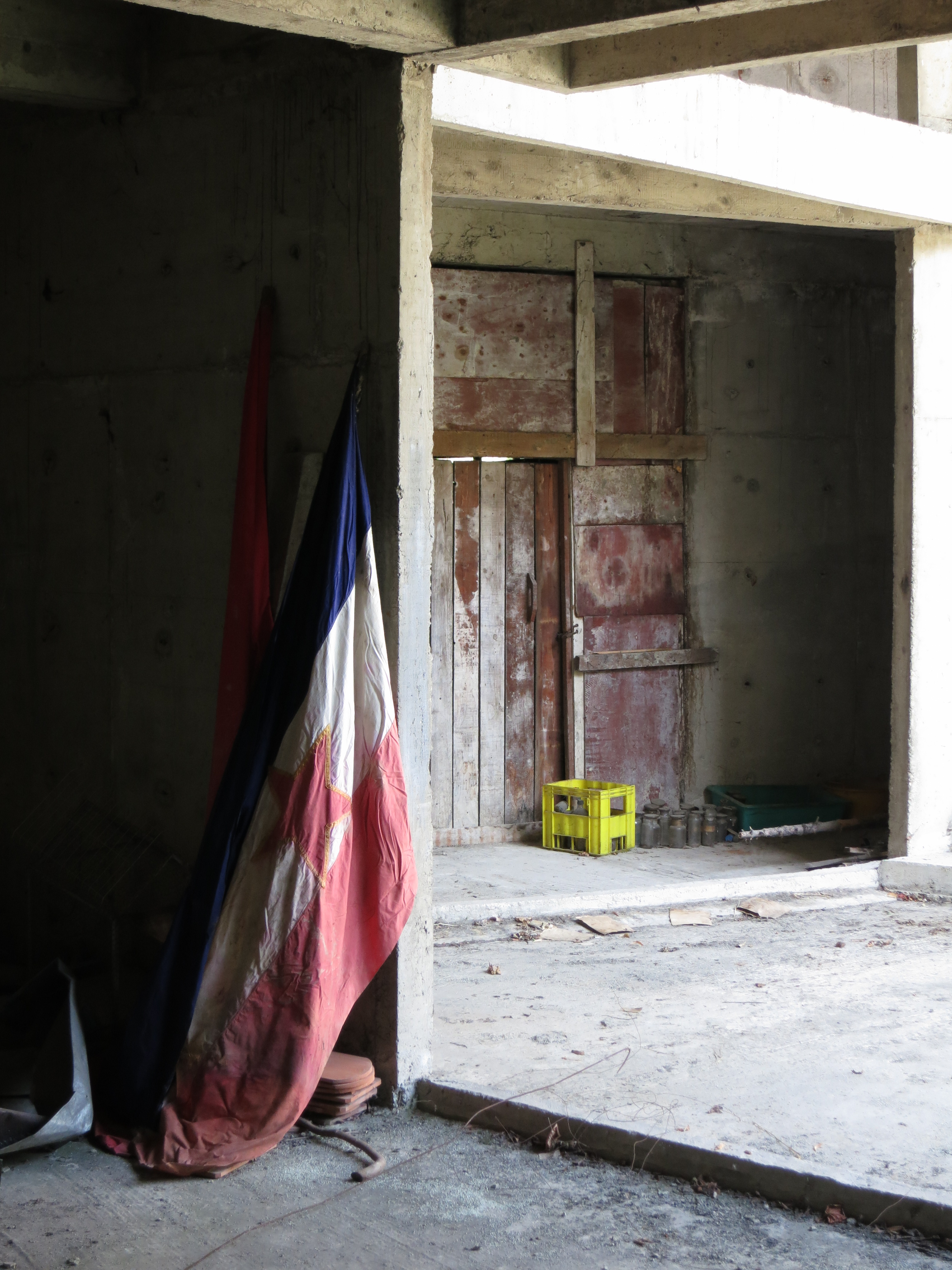
As for actual stuff we did in this excellent city?  Belgrade Fortress, at the junction of the Rivers Danube and Sava, is an impressive edifice – especially lit up at night – and its past, about which I admit knowing very little, is an impressive reminder that Serbia’s history is not entirely defined by the last twenty years.  The Museum of Yugoslav History was a slightly odd but nonetheless worthwhile visit – basically a monument to Marshall Tito, focussing on his mausoleum.  The Aeronautical Museum was entertaining, mostly for the collections of “and here’s what’s left of some cool American stuff we shot down with our rusty old MiGs and leftover Soviet hand-me-downs.”  The botanical gardens were somewhat barren and joyless (and under reconstruction), but they fully redeemed themselves by having a beautifully decaying greenhouse (unfortunately closed at the time) and, even better, a half-constructed then fully-abandoned concrete amphitheatre which you can climb all over.  (The latter even had a faded Yugoslav flag in the basement, for that extra historical street-cred.)

The glasshouse in the Botanic Gardens of Belgrade

… and also in the Botanic Gardens, a Yugoslav flag in an abandoned concrete amphitheatre

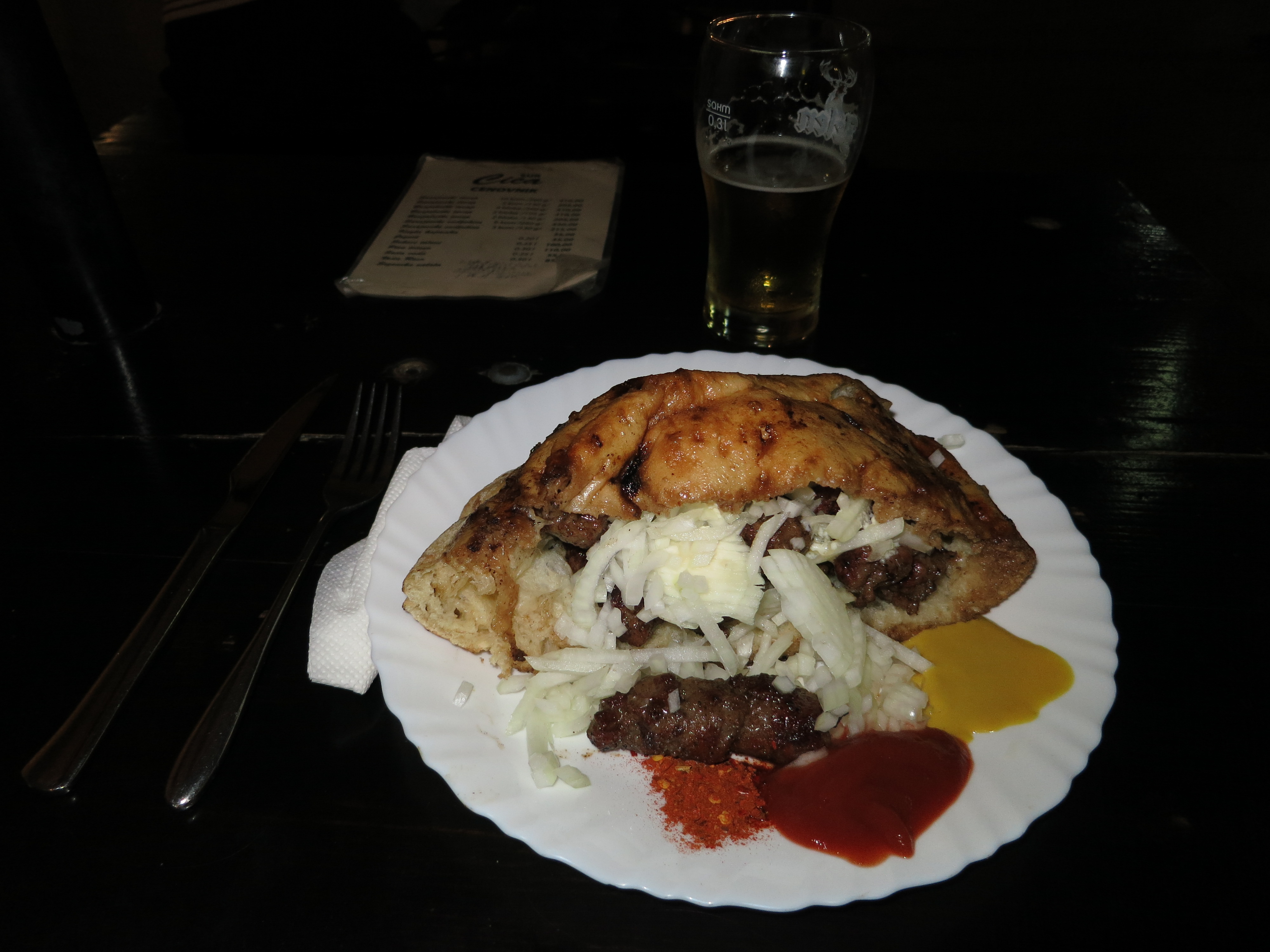
By day, the island of Ada Cingalija, in the middle of the River Sava, is a brilliant spot to sit out the heat of the summer sun, with its riverside beaches and bars and forested greenery.  (And its floating shacks on the northern side, of whose owners I am not in any way insanely jealous.)  By night, the party moves back into town – and while we didn’t pull many all-nighters ourselves, it’s obvious that Belgrade fully deserves its reputation as a highlight of Europe’s social scene.  Its bars are the equal of its cafés, and being right smack bang in the middle of a region whose specialty food is greasy minced meat in whatever form you can shove it in your pie hole, how could it not have a big appetizing late-night party scene to precede those inevitable late-night big appetizing greasy foodstuffs?

Ćevapi: food of kings. Not so much of vegetarians.

But mostly, we weren’t too concerned about running around and seeing every last sight on the tourist map, or checking out all the trendiest night spots.  We took it easy and just enjoyed ourselves.  It’s an approach Belgrade seems to encourage, and that suited me just fine.  As I have no doubt it will next time I’m in town.  Which will be whenever I next have the chance.

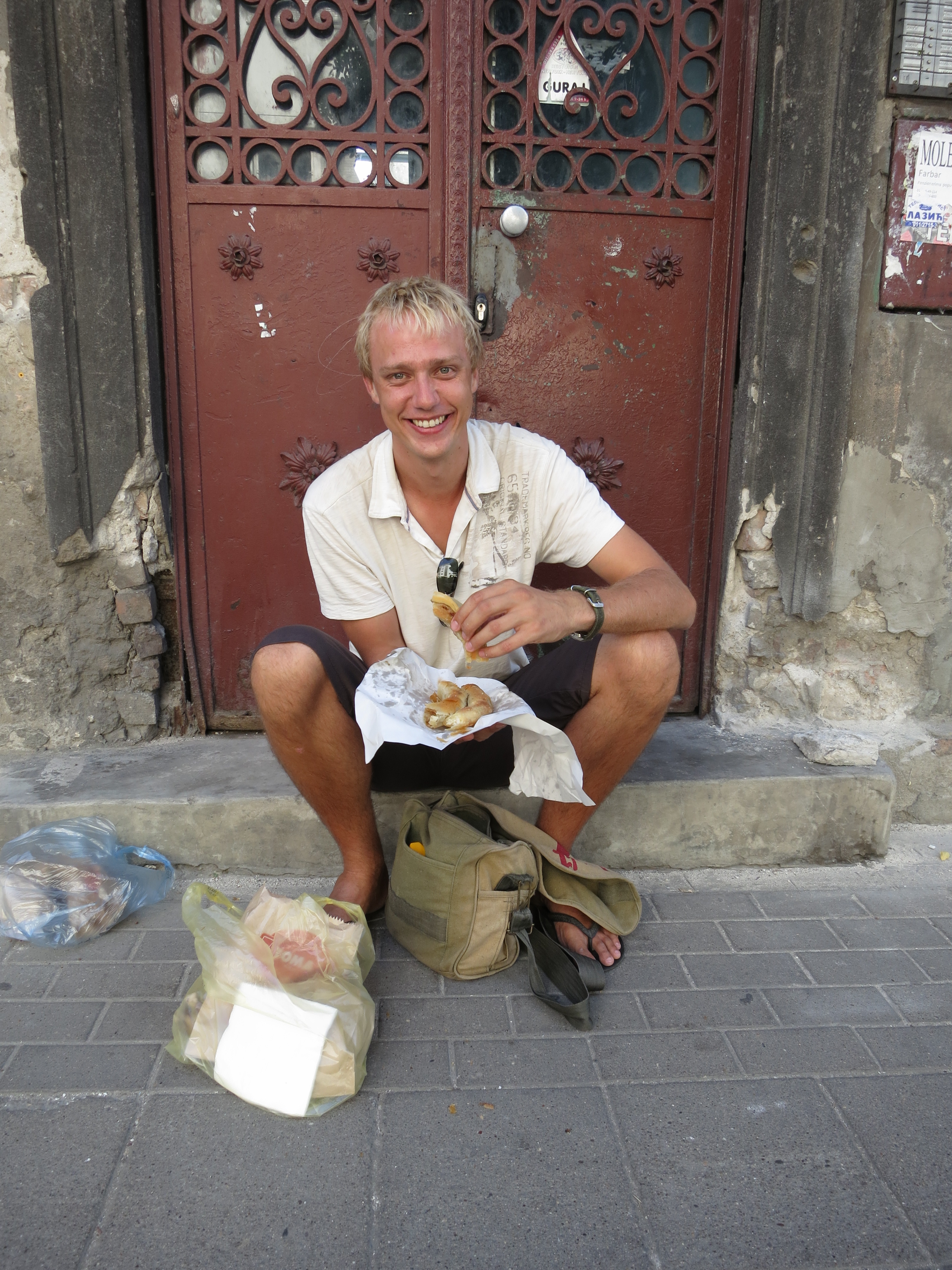
How I spent most of my time in Belgrade. Lazily stuffing my face.

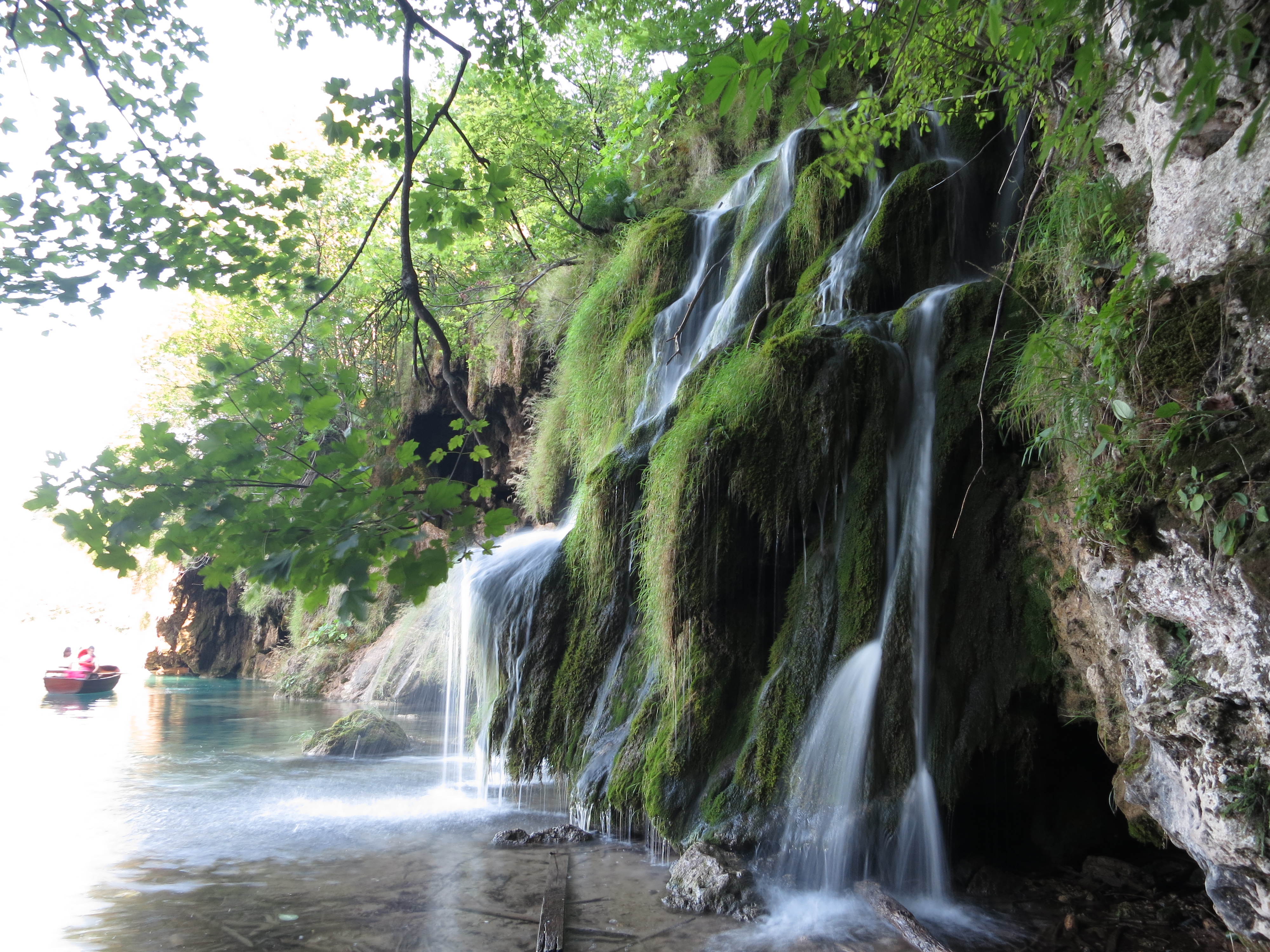
The blues and greens of Plitvice National Park

Plitvice National Park is one of Croatia’s greatest natural beauties — and Croatia has a few of those, so that claim genuinely means something.  (Catching buses from Split to Dubrovnik and then Dubrovnik back up to Zagreb was a quite spectacular way to see a lot of that natural beauty — especially along the coast.)

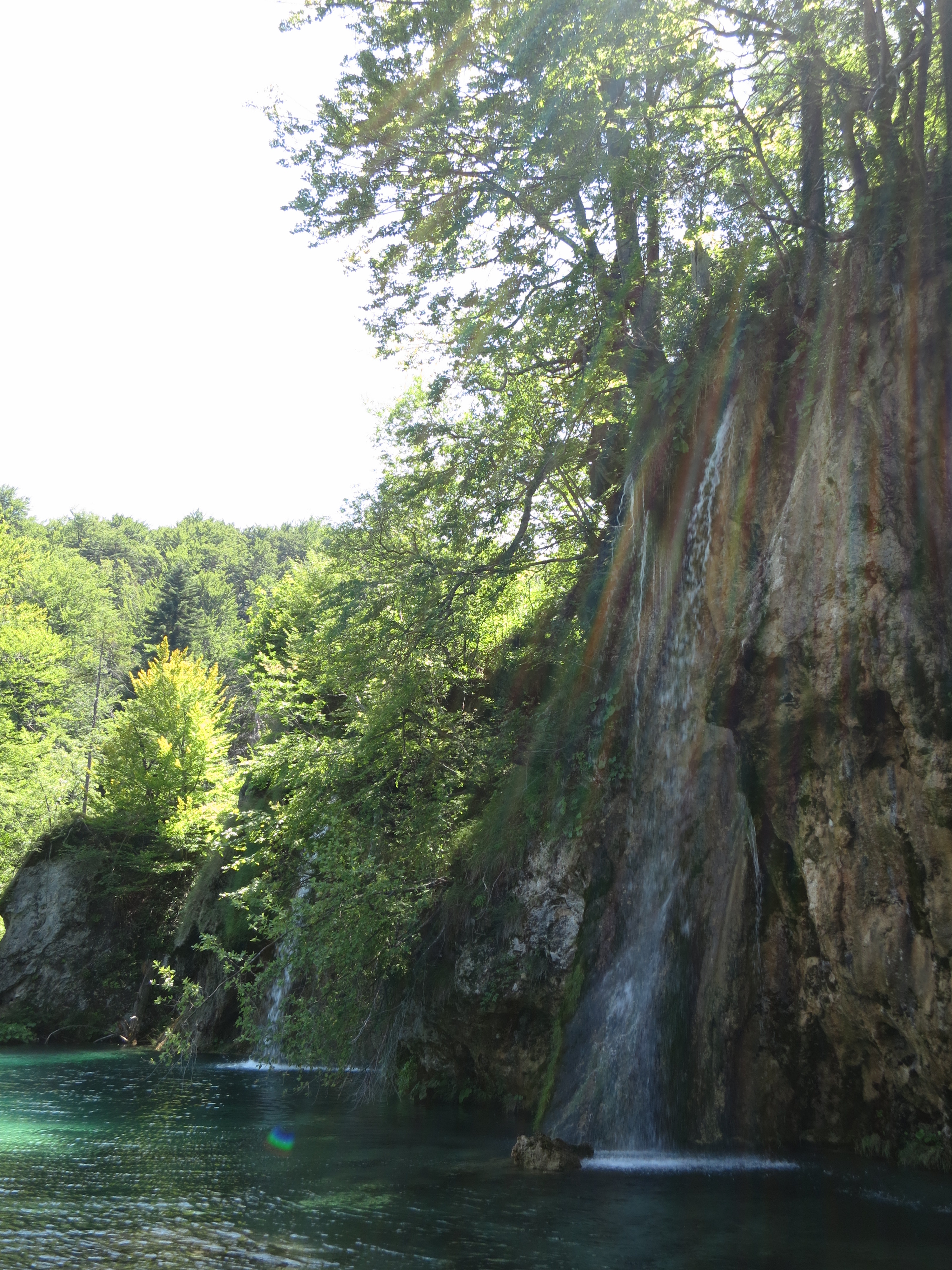
A lakeside waterfall in Plitvice National Park

There is some mythology behind the park’s natural wonders, but I’ll freely admit to not knowing it.  All I know is that it’s a collection of beautiful blue lakes, connected by a stunning array of streams and waterfalls, terraced over an area that makes for a good solid day’s hike, and all within a convenient couple of hours bus ride from Zagreb.  (And that combination of some great walking plus a couple of hours’ bus trip from the capital is even better when you consider that it’s enough to deter many of the tourist hordes that might otherwise ruin a perfectly pleasant meander in the woods!)

So instead of a story to tell, all I have is pictures to share.  Bear in mind that our trip to Plitvice happened just after I got my replacement camera, so this was a particularly welcome opportunity for me to put it to best use.  (Well, as best as my limited photographic ability can use it, anyway.)

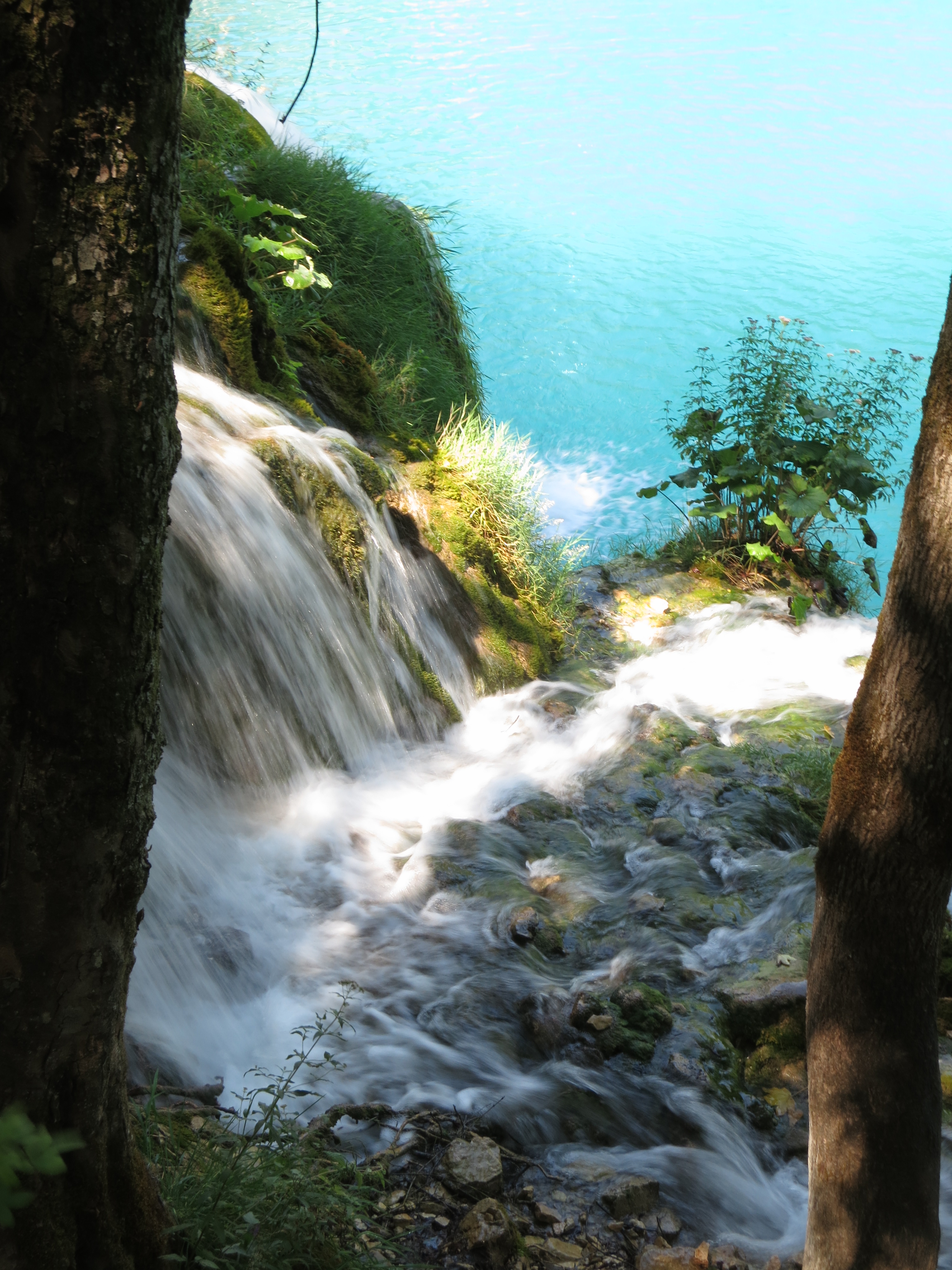
Waterfalls and long exposures: a great way to play with a newly replaced camera

Suffice to say that it was a day of waterfalls, forest hiking (with possibly just a little bit of getting lost along the way), and happy snapping.  A fantastic day trip from Zagreb.

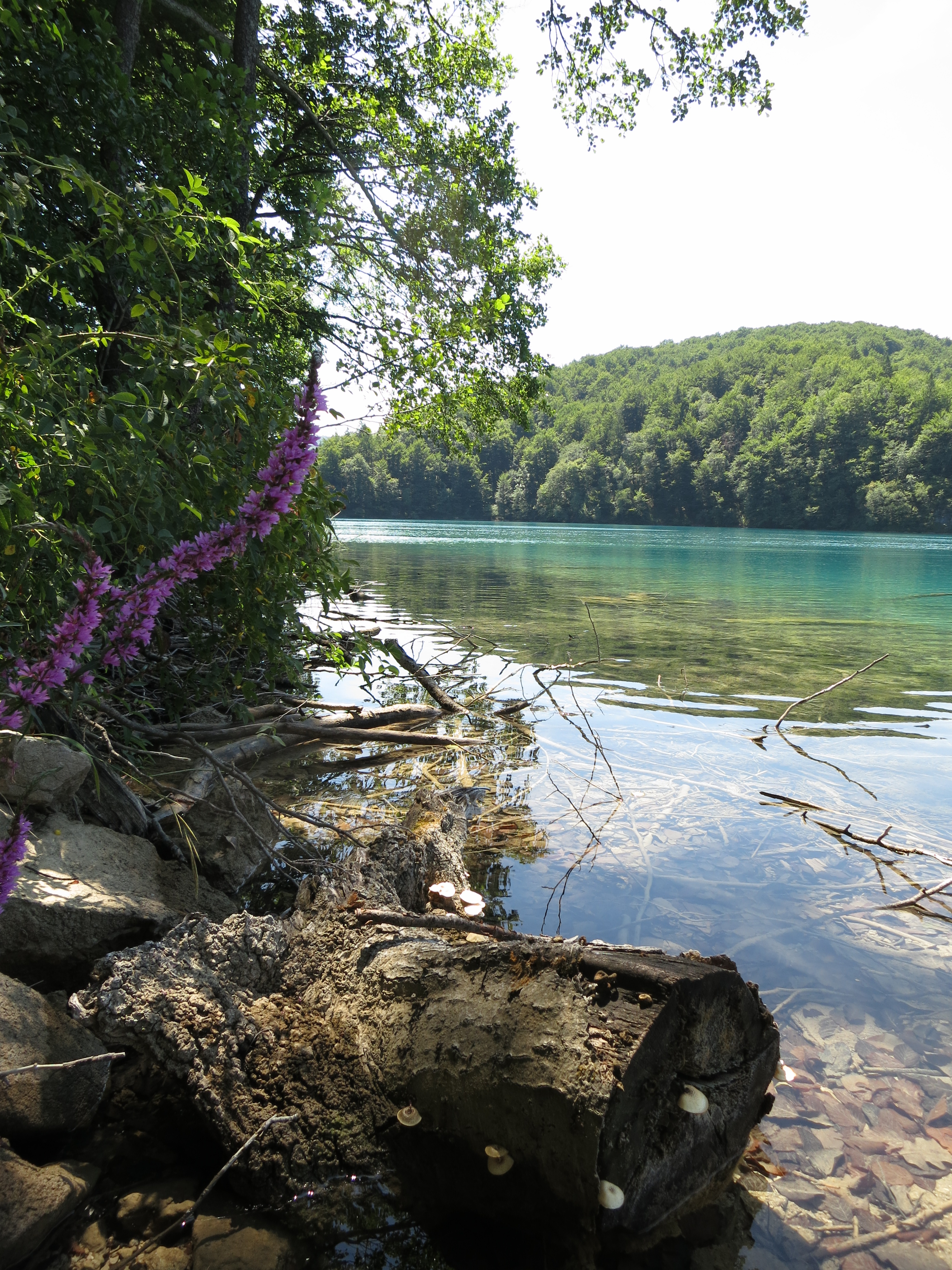
Lakeside by the beautifully clear water

Transport notes for any other aspiring visitors:

  • You can easily day trip via bus from Zagreb.  Get a nice early bus out from the main Zagreb bus station to Plitvička Jezera (timetable here), and you’ll find it easy enough to grab a bus on the road on the way back.  (Though it’s worth making sure you know when the return buses run – there’s a timetable posted by the ticket booth  to the National Park entrance which’ll tell you.  Probably worth a quick shot of that on your camera – you did bring a decent digital camera, right? – so that you can refer back to it when you’re coming towards the end of your day’s hiking and you’re trying to figure out roughly when you’re likely to be done for the day.)
  • If you get to the ticket desk of the bus station in Zagreb only to be told the bus is full, as we were, don’t sweat.  On a hunch, we wandered down to the actual platforms downstairs, found the bus, and asked the driver if he could take us.  Yes, it turned out, so long as we didn’t mind sitting in the aisle.  Done.
  • There are actually a couple of bus stops which you can jump off at for Plitvice – there are two main entrances to the park.  We jumped off at entrance one.  If you’re not sure where you are, ask your bus driver/attendant – chances are they’ll be very helpful.  Otherwise, get off at the stop where all the other English-speaking people get off!
  • We took WikiTravel’s advice and followed ‘route K’, anticlockwise (to avoid the teeming masses and maximise the “wow, I have this whole incredible place to myself!” feeling).  Worked well, albeit that the northwestern-most bit, up in the hills away from the lakes, is easy to get lost in.  Well, it was for us…

Shafts of rainbow light through trees and waterfalls

Old faithful Zagreb

I really want to write a post about Zagreb that properly captures how much I love the city, but I have absolutely no idea how.  We didn’t do anything spectacularly newsworthy there.  We got my camera replaced (thank you so, so much to the wonderful people at Photo Centar for being considerably more helpful than Canon themselves in sorting out the manufacturing defect with my S100).  We went to the zoo and admired the cuteness of the marmosets and red pandas.  We went to the botanical gardens (in which I spent most of my time playing with macro mode on said newly-replaced S100).  We went to the movies.  And we enjoyed some good food and the microbrews of a couple of good pubs.

We spent our time with a dear and entertaining friend of mine as she showed us around her home town – me for the second time (thanks again, Laura!).  So I can’t even spout many words about the typical tourist trip to Croatia’s capital.

We (more particularly, I) ate lots of pastry things, often (ideally) filled with meat.

We visited the Museum of Broken Relationships, which I suppose is blogworthy.  It’s a collection of momentos with accompanying pithy explanatory remarks, each exemplifying a contributor’s failed (or otherwise terminated) relationship.  It’s a small but thought-provoking set of exhibits, ranging from the funny, through the sad, and occasionally to the frankly bizarre and slightly disturbing.  Such as the axe which a contributor used to hack to pieces all the furniture of her jilted girlfriend, because it apparently wasn’t collected sufficiently quickly after the relationship went sour.  Definitely different, and worth a visit.  And it sells ‘bad memory erasers’ in its gift shop.  So how could you go wrong?

Axe of a crazy woman

Zagreb does have a few icons which we happily snapped – its cathedral, and the mosaic-tile roof of St Mark’s Church, for example.  And it has a to-scale model of the solar system spread around its city streets – an entertaining diversion to track down, at least until you get past Mars and realise that Jupiter is a couple of kilometres away.  (Now I know how Voyager felt.  “Seriously?  Whose idea was this asteroid belt shit anyway?!”)  And its Technical Museum is surprisingly cool – including its (at the time) current temporary display of historical fire-fighting equipment, and its more permanent displays of various other random pitstops on the path to technical advancement.  In particular, it’s hard not to enjoy one of their regular demonstrations of Nikola Tesla’s more interesting playthings.  (The Croats do love their Nikola Tesla.  The Serbs love theirs, too.  I’m waiting with bated breath to get to the US next year and hear just how great their Nikola Tesla was.)

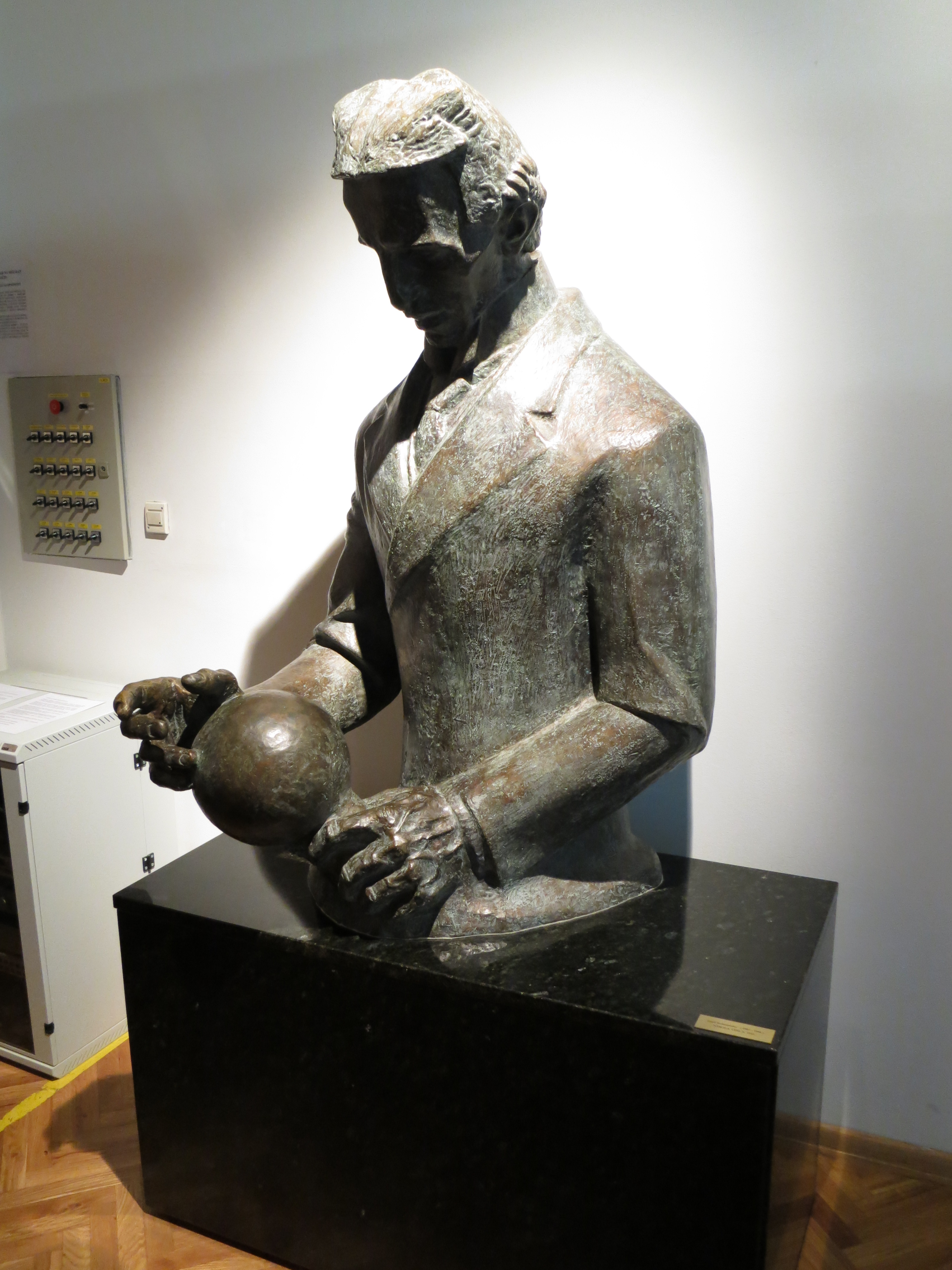
Croatia’s own Nikola Tesla (not to be confused with Serbia’s own Nikola Tesla), in bust form in the Technical Museum in Zagreb

But compared to many of the other places I’m visiting, I suppose Zagreb does fall short in the tourist attraction department.

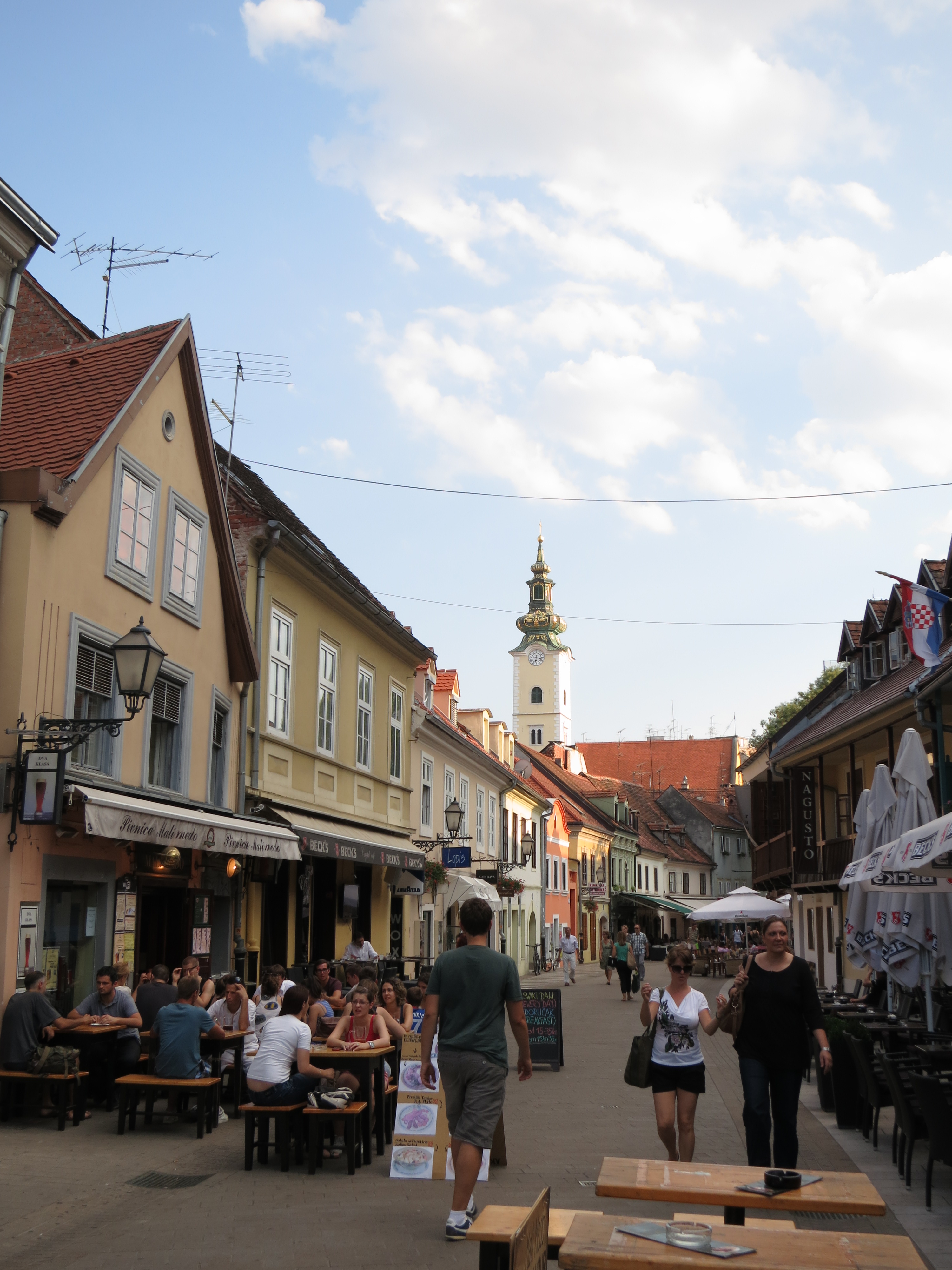
But maybe that’s part of what I like about it.  There’s a relaxed and comfortable feel to Zagreb.  It’s an easy place to sit around and enjoy life.  It’s not in a hurry, it’s open and friendly, and it’s easy to get around.  (The tram system is convenient and extensive – a combination of modern and old, boxy, vaguely Soviet-looking trams roaming all the major streets around town.  And if you ask the locals, half of them will tell you it’s free, too:  fare evasion is the accepted norm, in protest at high prices and corrupt management, I’m told.)  It’s not a big city, though, and there’s not many places you need go.  Find yourself a good spot on Ulica Tkalčića (Tkalčića St) – the main pub and café strip – and watch the evening go by, and I hope you’ll see what I like about it.

Ulica Tkalčića, your one-stop while-the-afternoon-away shop off Zagreb’s main square

Zagreb is not the most exciting city, but it’s definitely one of my favourites.  A city to live in, not to visit – even if you’re only there for a couple of days.

Up, in and around the walls of Dubrovnik

By the time we got to Dubrovnik, we were a little more energetic than we’d been in Split.  Our days were still filled with cafés, cakes and minced meat, but we also added ice cream.  Quite a lot of ice cream.  And the Olympics were just starting (yes, I’m still well behind on posting these damn blog posts, we’ve already covered that), so we picked a typically Croatian Irish pub and enjoyed a typically Croatian Guinness while watching the typically Croatian London 2012 opening ceremony – in Arabic on al-Jazeera, because the owner seemed not to have realised aforehand that his Sky Sports package didn’t include the BBC.  (Also featured:  a typically Croatian British tourist throwing up into her beer at the table next to us, as her boyfriend fell typically – but, in fairness, not entirely Croatianly – asleep across the table and her friend explained loudly and drunkenly how much she hated Sebastian Coe, and – this shouted apparently without irony – would he please get off the TV because no one wanted to listen to what he had to say.  A lovely counterpoint – or perhaps just honest addition – to LOCOG’s depiction of British culture.)

Once done admiring our apparent metamorphosis into exactly the eating + drinking + sitting + nothing type of American / Aussie / Brit tourist we generally mercilessly mock (you know, the one that somehow manages to trudge around the world while doing exactly the same thing everywhere else as they do at home), we got to exploring Dubrovnik:  the old town, the walls that surround it, and the sea around that.

Inside the old town was pleasant, but almost oppressively over-touristed and kitsch.  The walls were definitely a good walk – strolling around the top, circling the whole of the old town, peering into the back yards and through the washing lines of the locals whose apartments back onto the expertly masoned ancient stone defences.  For a better view, though, we climbed the hill to overlook the old town as the sun set.  (There’s a cable car up to the observation point too, but where’s the fun in that?)  The dying sun beautifully painted the city, the landscape, the seascape, and the scene of me on a hill muttering curses at Canon for the manufacturing defect that had rendered my camera useless a week earlier (or more, rather, for Canon’s inability so far to usefully answer any question about what they might be able to do about it).  [Post script:  don’t worry, the wonderfully helpful guys and girls at Photo Centar – a third-party Canon-authorised service centre in Zagreb – were able to replace my camera a few days later (despite continued utter uselessness from Canon’s own customer service), so the period of cursing was soon to end, and I’ll soon be back to posting my own pretty pictures in amongst the boring text I inflict upon you all here.  Meantime, thanks again to Chris for allowing me to steal his pretty pictures instead:  all credit for the photos in this post is his.  Although obviously I provided significant editorial guidance and stuff.]

Dubrovnik at sunset, as viewed from the observation point on the hill

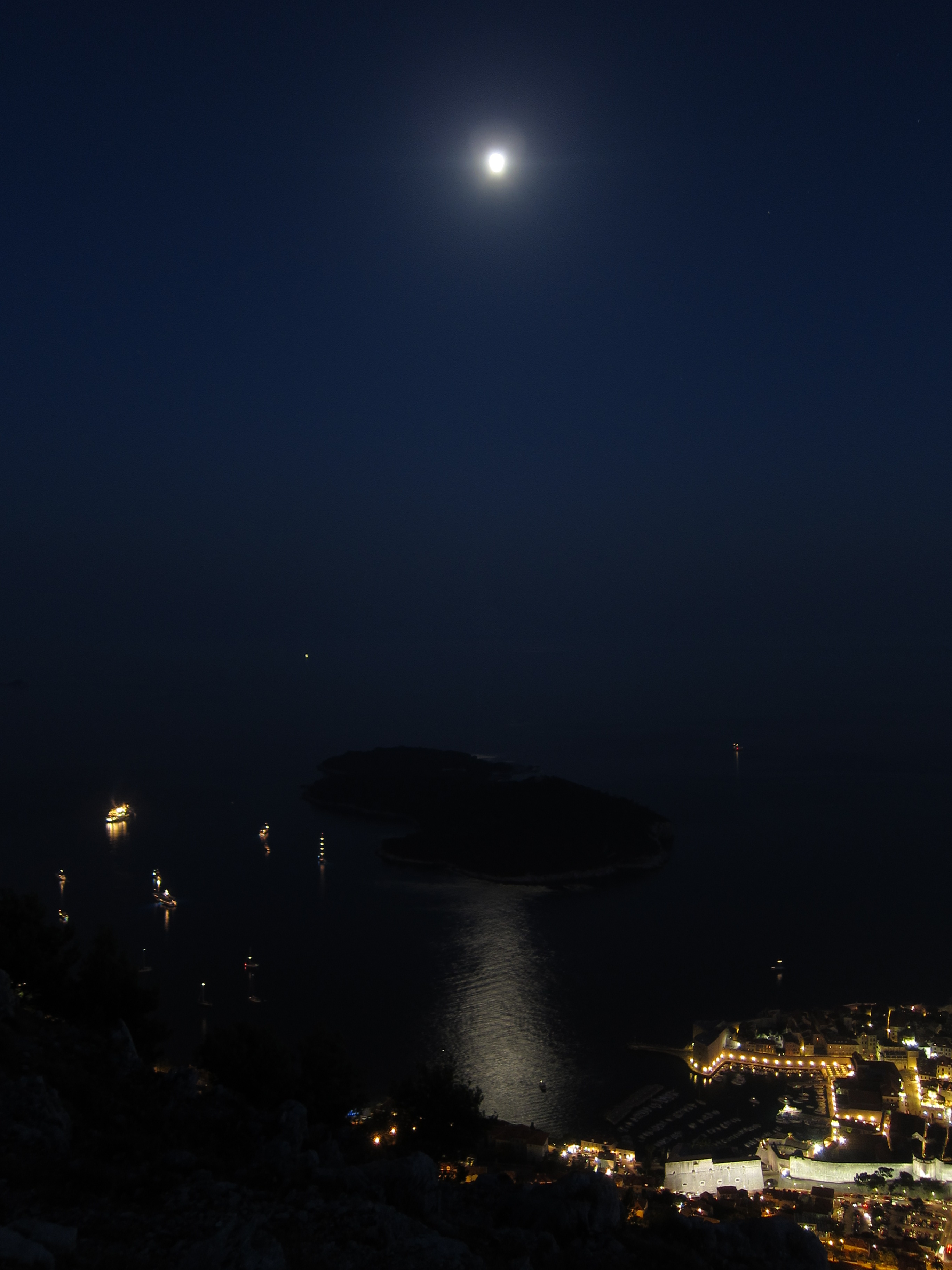
… and after sunset, as the old town lights up and the moon shines over Lokrum Island

And having seen the walls from above, we also made sure to see them from below (albeit it not at sunset), jumping in the water on one side of the old town and swimming along outside the seaside wall right over to the other.  And then back again, for good measure (and since we were enjoying ourselves).  It was such a pleasant experience out in the water that the next day we rented kayaks and spent a couple of hours paddling not only around the seaside wall, but also out and around the nearest island, and along the coast to the east and west of the old town.  (In what I hope is not developing into a theme, this circumnavigation of Lokrum Island took us right past a nude beach.  Thankfully we were this time far enough out in the water not to be overly confronted with quite such a detailed appraisal of the efficacy of the beach-dwellers’ valiant struggles against tan-lines.)

The walls of Dubrovnik, seen from the vantage point of an approaching kayak

And that was pretty much it for our time in Dubrovnik.  Which, I gather, marks us out as a little different from the majority of Australian passers-through.  At least according to Anna, the lady running the hotel we inhabited.  See the people on the rocks outside the wall in the photo just above?  Yeah, apparently that spot proves a problem for a number of Australian tourists.  It’s a bar/café, and a great place to enjoy the seaside.  But in Anna’s words:  “You go drink, no problem.  You go jump in the water, no problem.  You go drink and then jump in the water?  Problem…  I get phone call in early morning to come pick you up from nightclub, that’s fine.  I get phone call in early morning to come pick you up from hospital?  Not fine.”

But hey, I’m OK with being a little different.  Especially if the difference is that my arms and legs all still point in the directions I tell them to.  Coz I’d appreciate being able to continue to swim and kayak around the world’s more beautiful cities when I want to.  If it’s all the same to the rest of you…

Back!

* Bells ringing *

“Intermission is now over, please retake your seats”

I’m back from the Himalayas.  (Safe and sound — thankfully, we were nowhere near the avalanche that claimed a dozen or so lives in northern Nepal, and we were nearly a week into our hike by the time we heard about the plane crash on the route we’d flown to get up to the mountains.)

And in actual fact, I’m one country further on from there already, having spent a whirlwind two days in Singapore en route to Hanoi, whose food I’ve been hungrily devouring over the last couple of days.  (Not that I didn’t hungrily devour Singapore’s, too.)

So, as promised, we’ll shortly be resuming our irregularly programmed regular programming, starting with Dubrovnik, before working our way through the Balkans, Egypt, Jordan, the UAE and Hong Kong before you even see another word written about Nepal.

In the meantime, here’s one of my favourites of the thousand-plus photos I happily snapped while wandering around the mountains.  (All of which I have yet to organise, caption, etc.)  That would be Mt Everest in the middle (with the sun poking out behind it), looking for all the world not as tall as Lhotse, to its right.  Enjoy!

The sun rising behind Mt Everest (centre) and Lhotse (right), as seen from Kala Patthar

Intermission

The fact that I’m really quite behind on writing these blog posts means that what I’m writing about has very little to do with what I’m doing currently.  The next post is to be about Dubrovnik.  But right now, I’m fully ten countries later, and in Kathmandu.  You’ll probably read all about that here in, say, three years’ time, at the rate I’m scribbling.  But more to the point, you won’t read about anything at all here for at least the next three weeks.  I’m about to go hike up to Everest Base Camp.  And while the technology is most certainly encroaching on the roof of the world, I won’t be spending my time running around attempting to obtain me some internets.

So please excuse the hiatus.  We’ll return to our ridiculously irregularly scheduled programming sometime in mid-October.

Relaxing in Split

If I’m honest, I have to admit that we found not all that much we wanted to do in Split.  Which was great, since “not all that much” was precisely what we were pretty keen to do for a few days.  After I’d spent a busy couple of days running around Rome, I was a little touristed out.  And that wasn’t helped by the overnight ferry that got us from Italy to Croatia.

(Well, actually, the ferry was fine.  It was the “our religion apparently doesn’t require us to be considerate of other people” group of bothersome Christians on a god tour that wasn’t.  Apparently the way to make their deity happy involved making everyone else in the vicinity unhappy, conducting an hour-long chant-filled and rosary-beaded church service among the congregation of passengers in their seats.  Starting at 10.30pm.  While others (me) tried in vain to sleep (or even just think) in the midst of the chanters and choristers.  Thought of the day:  if annoying the hell out of everyone around you is truly what pleases your god, then your god might just be a bit of a prick.)

Anyhow, Split was a destination in which we gladly parked our arses doing little but enjoying cafés and cakes and various forms of minced meat.  I have fond memories of an excellent fast food trailer near our accommodation, at which I hungrily devoured ten ćevapčići followed by a delicious hamburger featuring a large slab of bacon slapped on top of a succulent feast of burger meat.  It was gut-rumblingly good.  And the café across the road was good enough – their coffees and cakes, and their comfortable sunshine and (to us, at least) laughably fantastic prices – that we graced it with our presence at least once every day until we moved on to Dubrovnik.

So while we did explore the town, climb to the lookout on the hill on near the point, meander among the market stalls, climb the bell tower, eat our fair share (and more) of various typically local grilled meat products, and stroll the beaches, we didn’t ferry out to the islands.  We didn’t snorkel.  We didn’t sail.  We didn’t boldly go, nor partake in any of the other no doubt fantastic experiences this particular part of the Croatian coast has to offer.  We relaxed.  (I guess I’ll just have to come back and sail around the islands some other time!)

I suppose it could be argued that our first stop in Croatia was boring, then – moreso than, say, that of the two English guys who left our hostel dorm the day after we arrived.  The ones who left looking very seedy indeed, leaving in their wake enough empty two litre bottles of no-doubt-exquisite-quality bargain-basement-priced local beer, enough discarded food wrappers and enough empty packs of paracetamol to give a pretty good idea of how they’d spent their week.  Apparently Split can be quite the party town.  But for us it wasn’t, and we were happy with our choice, and glad to enjoy a lazy introduction to the Balkans.  We achieved everything we wanted to.  Including figuring out what the hell we might consider doing for the next few weeks, exploring what my Year 7 geography class taught me to locate on a map as the Socialist Federal Republic of Yugoslavia.  And having done that figuring and considering, we left with a pretty good feeling that we were going to enjoy the exploring.  A lot.

[Sorry, no pictures on this post since my camera was indisposed.  Pictures will return once I catch up to Zagreb in a couple of posts time, I promise!]

Rome – the highlights

My trip to Rome felt a lot like those late night cricket highlights packages they broadcast for those who want more than just the two minutes they’ll see on the news, but don’t have the time or patience to sit and watch a whole day.  Our train got in on Friday evening, leaving us enough time for a decent pizza but not much else, and by midday on Monday we were back at the train station again, bound for Ancona to catch a ferry that night for Split.

So I had a Saturday, a Sunday, and a checklist of Rome’s greatest hits.  Basically, that covered the Vatican City, plus enough of the falling (or fallen) down bits that I felt I could justifiably claim to have done my high school Latin teacher proud.

On the way to the Vatican City: a bridge over the River Tiber, with the dome of St Peter’s in the background

Strolling through the Vatican Museum on Saturday morning was for the most part an exercise in the appreciation of scale.  The museum is not physically huge, but it’s certainly full.  The sheer quantity of stuff is quite something.  After a while, I have to concede that one ancient Roman statue (minus arms and one leg) starts to look very like another (minus head and genitals) – especially when they all seem to have had their midsections modelled on the same one guy, who apparently spent his entire life alternating between (a) functioning as some kind of Roman equivalent to a Calvin Klein model, and (b) lifting heavy things (and putting them down™) using nothing but his obliques.  (In fact, it seems reasonably appropriate that one of the more famous statues in the collection is the Belvedere Torso, which is headless, legless and armless.  Also dickless.)

The Belvedere Torso: priceless statue, slightly used, minor damage to certain parts

The statues, paintings and tapestries left a strong (and carefully cultivated) impression of the Catholic Church as a custodian of the history of Western civilisation.  Although religious iconography is not really my thing, so once I’d passed through the (many many) halls of Greek and Roman statues, I picked up the pace a little past the no-doubt-fascinating-to-plenty-of-people-who-aren’t-me rugs and painted things.

Of course, no matter how much interest you don’t have in carefully arranged pigments, the Sistine Chapel is going to be the focus of any trip to the Vatican Museum.  It didn’t disappoint, but it wasn’t quite what I expected, either.  (Probably because I read its Wikipedia page a couple of minutes ago, writing this post, rather than, say, before I visited the Vatican.)  For starters, it’s a plain rectangular hall, not the ornately furnished cross-shaped layout that my brain has associated with ‘proper’ chapels ever since I went to school (an Anglican one, admittedly, so not a massively logical association on my brain’s part, but whatever).  Wikipedia tells me its ceiling is barrel vaulted, but if you’d asked me ten minutes ago, I would have sworn it was flat – it’s certainly not the grandiose arch of a ceiling that I’d envisaged in my head either.  And the most famous part of the ceiling – the finger of God reaching out to touch the similarly extended digit of Adam – is, well, smaller than expected.  Less of a focal point, more of a nice touch that happens to be on the panel that happens to be in the middle.

But still, the Chapel deserves its fame (no doubt Michelangelo will be relieved to know I approve).  It’s tricky to get a full sense of its holiness and serenity when sardined in with several thousand others, many of whom are spending their time seeing how many photos they can take before a guard comes over to remind them that it’s bad manners to be taking happy snaps of Jesus when he already asked you not to at least forty times.  And that goes for photos of Jesus’ friends, too.  (Seriously, though, are any of those photos going to look good anyway?  The girl taking forbidden shots with her iPad not only wasn’t nearly as surreptitious as she thought – it’s an iPad, for fuck’s sake, it’s enormous – but I’m also guessing her photos would have turned out better if she’d bought a postcard, taken it outside where there’s some light, and taken a photo of that.  Although it would have been harder to get her dad in that, I suppose.  Meaning your family photo album would be missing that key “and here’s us violating the sacredness of one of the most important places of worship in all of Catholicism” shot.  So there’s that.)  Nonetheless, the holiness and serenity are still appreciable, despite the presence of the plebeian masses in the temple, and so the effect Michelangelo was after works out after all.

The famed ceiling of the Sistine Chapel (centre), from the side you’re allowed to take photos of: less impressive than you expected, no? It’s pretty good from the inside, though.

After the museum, it was back out into Italy to go round the corner and back into the world’s smallest state from a different side to see St Peter’s Basilica.  The Basilica is most impressive, inside and out.  Quite stunning.  At the risk of unintentionally involving myself in a dogmatic rift of faith in which I have no interest, I think I prefer it to St Paul’s in London, at least as far as its insides go.  (St Paul’s wins the iconic landmark competition, though, as far as I’m concerned.)  Anyway, I won’t go into any detail describing it, but I will mention that it’s worth your while doing the stair climb right to the top of the cupola for a great view over the Vatican and all of Rome.

The main altar of St Peter’s Basilica, complete with dusty rays of light and all-seeing eye of Sauron

View from the outside of the dome of St Peter’s Basilica, looking out over St Peter’s square and into Rome

I’ll spare you a recital of the minutiae of every last site I saw in the rest of my time in Rome, but the remainder of the highlight reel basically included:

  • the Roman Forum and Palatine Hill – a fitting, albeit delayed, follow-up to all those years reading Ecce, Romani! in high school (it’s a Latin textbook).
  • the Colosseum – whatever you do, unless you’re doing a guided tour, follow Wikitravel’s advice and don’t buy tickets at the Colosseum itself.  I went to the Roman Forum first (the one ticket, bought there, covers entry there and to the Colosseum, and there was almost no line at the Forum at 10am), and very much enjoyed a satisfying stroll past the enormous Colosseum line to go straight in.
The Colosseum. Looks pretty good from the inside, too, no?

  • the Circus Maximus – impressive in Ecce, Romani!, less so in real life these days, especially after the imposing grandeur of the Colosseum.  Now strangely reminiscent of The Castle:  ‘I dug a hole.’  Or, since they appear to be rebuilding it currently, perhaps the Six Million Dollar Man.
  • the Trevi Fountain – good lord there are a lot of people here!  Nice fountain, though.  Apparently it collects about €3000 of coins per day, just sitting around doing nothing.  I’m sure there’s some sort of joke to be made there about welfare fraud or something, but I’m too lazy and comfortable in my unemployment to make it.
  • the Pantheon – a personal favourite, although it would be even better to be there when it rains, with the rain falling into the centre of the church floor through the giant hole at the apex of the dome.
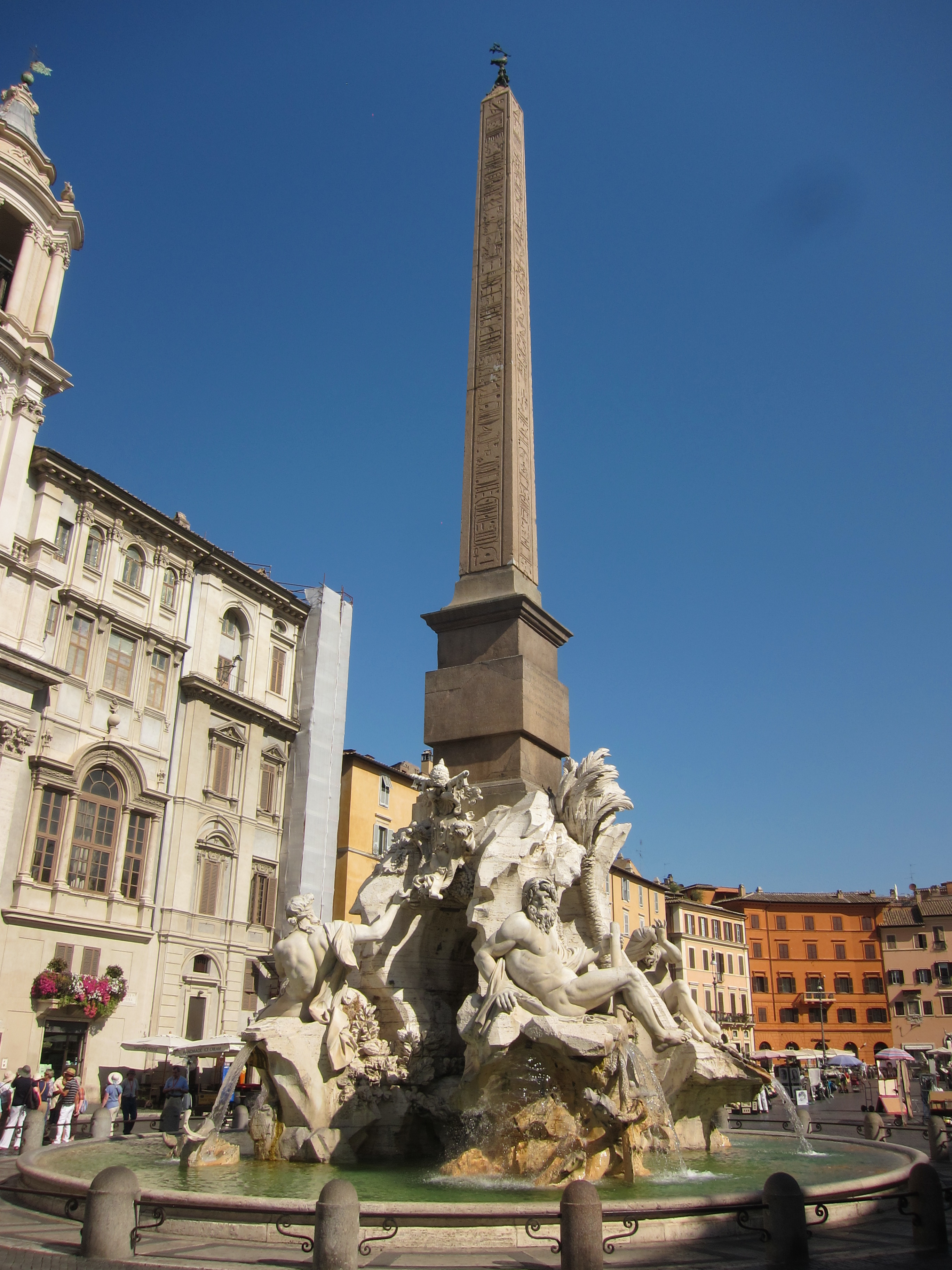
  • Piazza Navona – done early in the morning, before it was full of other photographers crowding the sculptures and getting in the way of the photos I wanted.

The colourful Piazza Navona

  • Terme di Caracalla (the Roman Baths of Caracalla) – big enough for 6000 customers and with an Olympic-sized pool in the frigidarium, the scale of these is fantastic.  There’s not a lot of pretty stuff left there, though I’d earlier seen the Farnese Bull (a huge statue group) in the museum at Naples, so it was interesting to see where that once stood.
  • the Pyramid of Cestius – a slightly bizarre sight right next to an old gate in the city walls, but there you have it.  Apparently cool enough to have its own metro station.
  • more pizza.  Also calzone.

All up, it made for a busy couple of days in the capital of the ancient (Western) world.  I’m sure at some point I’ll be back to see what the city’s like when not running around like a headless chook with a camera.  (And maybe even by then I’ll have my own camera back, if Canon can ever tell me what cunning plan they have for fixing the manufacturing defect in my otherwise excellent S100.  [Late posting note:  this got sorted in Zagreb, so you can all stop worrying your pretty little heads.]  Thanks to Chris for letting me borrow his S90 for said running around – all the photos in the post are by me, but with his camera.)  But in the meantime, job done!

Ecce, Romani! (“Look, the Romans!”)